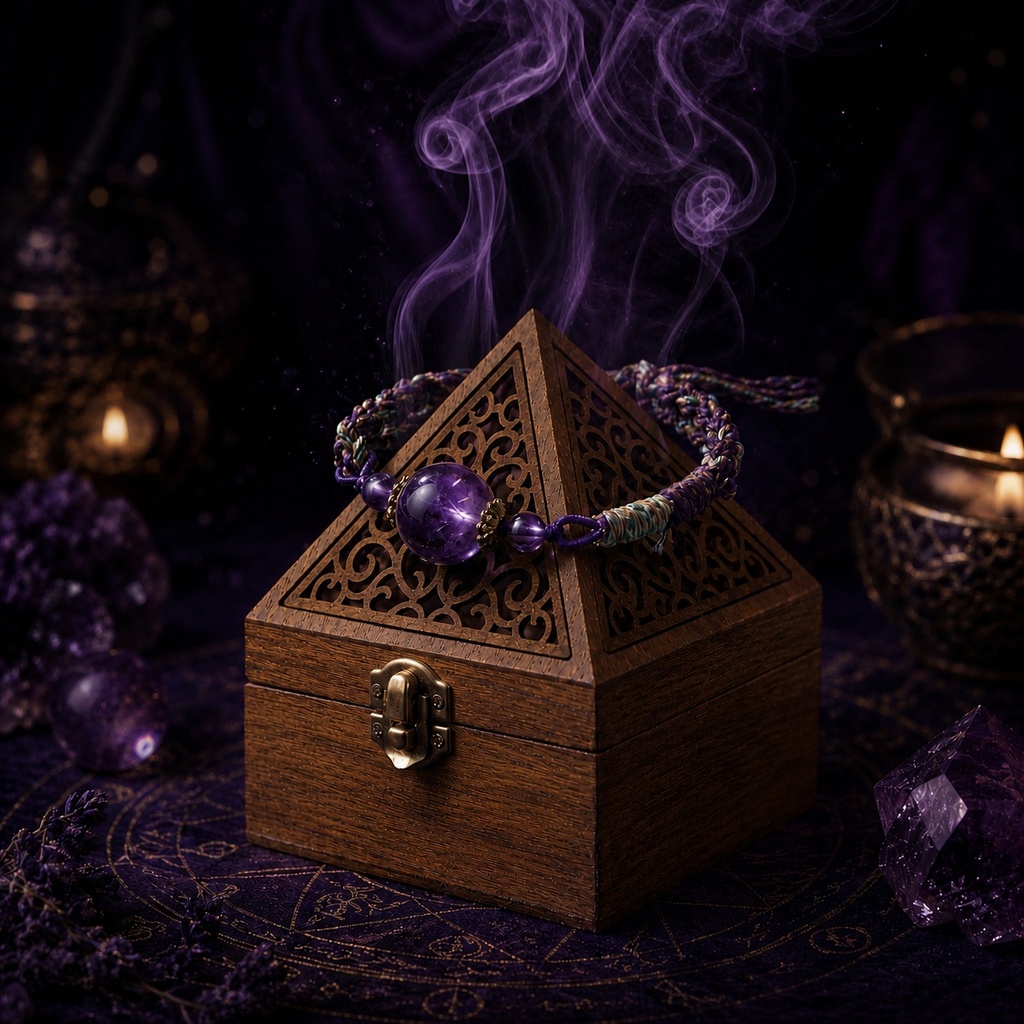
There is a specific moment that happens when you pick up a piece of handcrafted jewelry for the first time. You notice the weight of it. You turn it over. You find a knot that was tied by hand, a stone with a small shadow inside it, a cord that curves the way thread does when a person, not a machine, has pulled it tight. That tiny irregularity is usually the thing that makes you keep it.
Mass-produced jewelry is designed to be identical. Handcrafted jewelry is designed to be personal. And for a lot of women building slower, more intentional routines, that difference matters more than any trend cycle. A handwoven bracelet or a knotted pendant is not just an accessory — it can be a small, wearable reminder of how you want to move through your day.
This is a closer look at why handcrafted jewelry, braided cords, natural stone variation, and small-batch production feel so much more personal, plus practical ways to choose, wear, and care for pieces you will keep for years.
Why Handcrafted Jewelry Feels Different Once You Are Wearing It
Mass production optimizes for consistency. Handcrafting optimizes for character. When a piece is made by hand, the maker adjusts as they go: tightening one knot a little more, choosing which stone sits closest to the clasp, trimming a cord to sit comfortably on a wrist they can only imagine. Those decisions are small, but they add up into something you can actually feel.
There is also the matter of imperfection. A hand-braided cord may have a slightly uneven rhythm. A natural stone may carry a faint line or a cloudy inclusion. None of that is a flaw to be hidden. It is evidence that a person made the piece rather than a mold, and many women find that the irregularities are exactly what makes it feel like theirs — a quiet signature instead of a serial number.
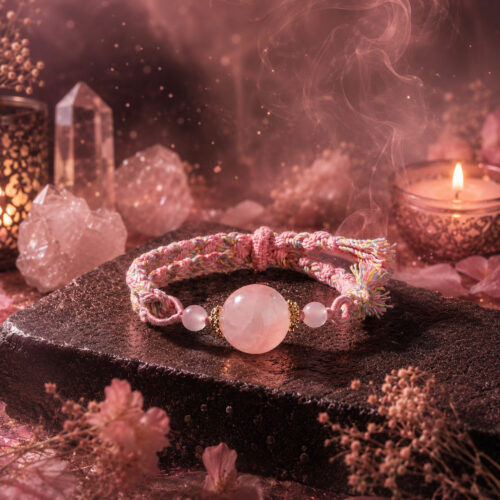
Then there is symbolism. Handcrafted pieces often arrive with a story attached: a color story, a name, an intention. Pieces like the Return to Zero obsidian bracelet or the Rose Memory rose quartz bracelet are designed that way — not as claims about what they will do for you, but as objects that can hold a meaning you assign yourself.
Shop the Sorvara ritual
The Quiet Story Inside Braided Cords and Hand-Knotted Thread
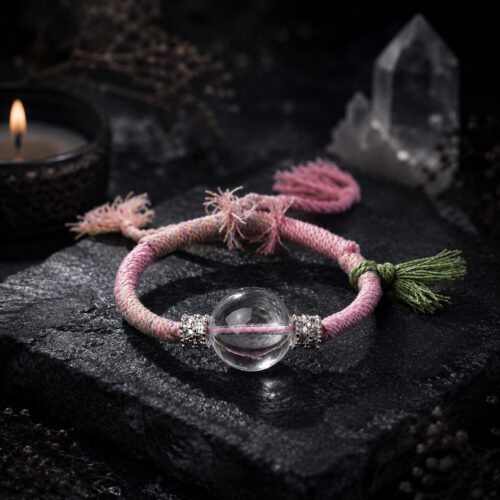
Braiding and knotting are two of the oldest ways humans have made something wearable. Long before clasps and cast metal, people tied fiber around wrists and necks — for decoration, for remembrance, for belonging. When you wear a knotted cord today, you are participating in a very old habit of marking a moment with something you can touch.
Hand-knotting also changes how a piece behaves. Braided cords tend to drape softly and adjust to the shape of a wrist or neck instead of sitting stiffly against it. Knots create texture you can feel with your fingertips, which matters if you are the kind of person who reaches for a bracelet during a long meeting or a slow afternoon. That small touch can serve as a grounding cue — a reminder to breathe, to slow down, to return to yourself.
Pieces that lean into this texture often feel less like jewelry and more like a companion. The Violet Heart hand-woven knotted crystal bracelet is a good example: the weaving is part of the design, not an invisible detail. The same is true of Slow Sunday, a soft, warm bracelet made for the kind of weekend where nothing is urgent.
- Braided cords soften with wear and slowly mold to your wrist.
- Hand-knotted thread creates texture you can touch as a small grounding cue.
- Visible construction is a feature, not a flaw — it shows the human hand behind the piece.
Natural Stone Variation: Why No Two Pieces Are Ever Exactly Alike
Every natural stone begins as something formed over a very long time, under pressure and heat, in a particular place. Because of that, no two are identical. Two rose quartz beads from the same batch will differ in translucency. Two obsidian pieces will differ in how light moves across them. Two amethyst strands will vary in how deep the violet goes.
For a buyer, this can feel uncertain at first. We are used to ordering a color and receiving exactly that color. Natural stone variation asks for a small shift in expectation: instead of matching a swatch, you are choosing a range. In practice, most people find this more satisfying, because the piece they open is genuinely theirs. It is also why photos of handmade jewelry can look slightly different from the piece that arrives — the stone decides some of the final details.
What to Look For in a Genuinely Handmade Piece
If you want to be confident a piece is handmade rather than hand-assembled from factory parts, look for a few signals:
- Visible knots or braiding where the cord meets the stone.
- Slight asymmetry in spacing, a sign of human rhythm rather than machine precision.
- Natural inclusions, color shifts, or soft cloudiness in the stones.
- Small-batch language: limited runs, seasonal colorways, made-to-order notes.
- Photos showing real pieces, not one perfect render used for every order.
Traditionally, certain stones are associated with certain themes — clear quartz with clarity, amethyst with calm evenings, obsidian with fresh starts, rose quartz with softness. These are symbolic associations, not promises. What matters is what the piece means to you. A Bubble Cloud clear quartz bracelet, for instance, can simply serve as a reminder to keep your thinking clear on a crowded day.
Small-Batch Jewelry and the Feeling of Being One of a Few
Small-batch production is a different economic model. Instead of thousands of identical units, a maker produces dozens or a few hundred, often in runs tied to a season or a specific color story. That changes the piece in ways you can notice: more attention per item, more willingness to use a stone that will not be restocked, and often a design that is not trying to appeal to everyone.
There is an emotional layer here too. Wearing something from a small run can feel like being let in on something. It is the opposite of the feeling you get from a piece you see on every third person at a party. Layered sets like The Story in Three Parts or the Golden Hour Choker lean into this — they are meant to be styled personally, in whatever order and combination suits your day, rather than worn as a uniform.
If you like the idea of jewelry as a slow, considered purchase instead of a seasonal impulse, small-batch pieces fit naturally into that habit. They also tend to age well, because they were never designed to be replaced every few months.
Building a Small Ritual Around a Handcrafted Piece
Jewelry becomes personal through repetition. The piece you reach for every morning becomes part of your routine; the piece you take off every night becomes part of your wind-down. You can make that more intentional without adding anything complicated to your day.
In the morning: choose with one word
Before you put a bracelet or pendant on, name one word for the day. Calm. Focus. Softness. Patience. Then choose the piece that matches that word. A Dream Cord pendant might suit a day that needs a little quiet imagination, while an Inner Cosmos pendant might suit a day of thinking things through. It takes about ten seconds and turns getting dressed into a small act of self-direction.
In the evening: take it off slowly
The evening version is the reverse. Instead of dropping your jewelry on the counter, unclasp it deliberately and set it somewhere you will see it tomorrow. Many people pair this with a quiet home ritual — a few minutes of incense, a lit candle, an open window. The Still Fire ceramic incense burner or the Pyramid Pine Wood Incense Burner works well for this: a slow, warm signal that the working part of the day is over.
Choosing Handcrafted Jewelry as a Gift
Handcrafted pieces make generous gifts because the thought is visible. You are not just giving an object. You are giving something made in limited numbers, with texture and variation that make it feel chosen rather than ordered.
A few practical notes:
- Choose a color the person already wears, not the color you would wear.
- Prefer adjustable or soft cords if you are unsure about sizing.
- Match the symbolism loosely — a fresh-start piece for a move or a new job, a soft piece for someone in a restful season.
- Pair a bracelet with a pendant if you want the gift to feel complete.
If you are unsure, a simple handwoven bracelet is a safe, wearable choice, while a set gives more room to layer over time. A named piece carries a little more weight, because it arrives with a story you can pass along.
Caring for Handwoven and Natural Stone Jewelry
Handmade pieces last a long time with small habits. Keep braided cords away from prolonged water and harsh cleaners, since moisture can weaken natural fiber over time. Put jewelry on after lotion and perfume have dried, not before. Store pieces separately so stones do not scratch each other, and lay bracelets flat rather than hanging them, which can stretch a hand-knotted cord.
Natural stones can be wiped with a soft, dry cloth. If a cord becomes frayed or a knot loosens, that is normal wear rather than a defect — and often a sign the piece has been worn often, which is the whole point.
A Piece That Feels Like Yours
Handcrafted jewelry, braided cords, natural stone variation, and small-batch runs all point in the same direction: toward pieces that feel personal rather than uniform. They ask a little more attention from you and give a little more back — in texture, in symbolism, and in the small daily moment of putting something on and deciding what kind of day you are walking into.
If you are ready to begin, start with one piece you will actually wear. Choose a stone color you love, pick a cord that feels good against your skin, and let it become part of a ritual you look forward to. A handwoven bracelet like Rose Memory or a grounding piece like Return to Zero is an easy, meaningful place to start.