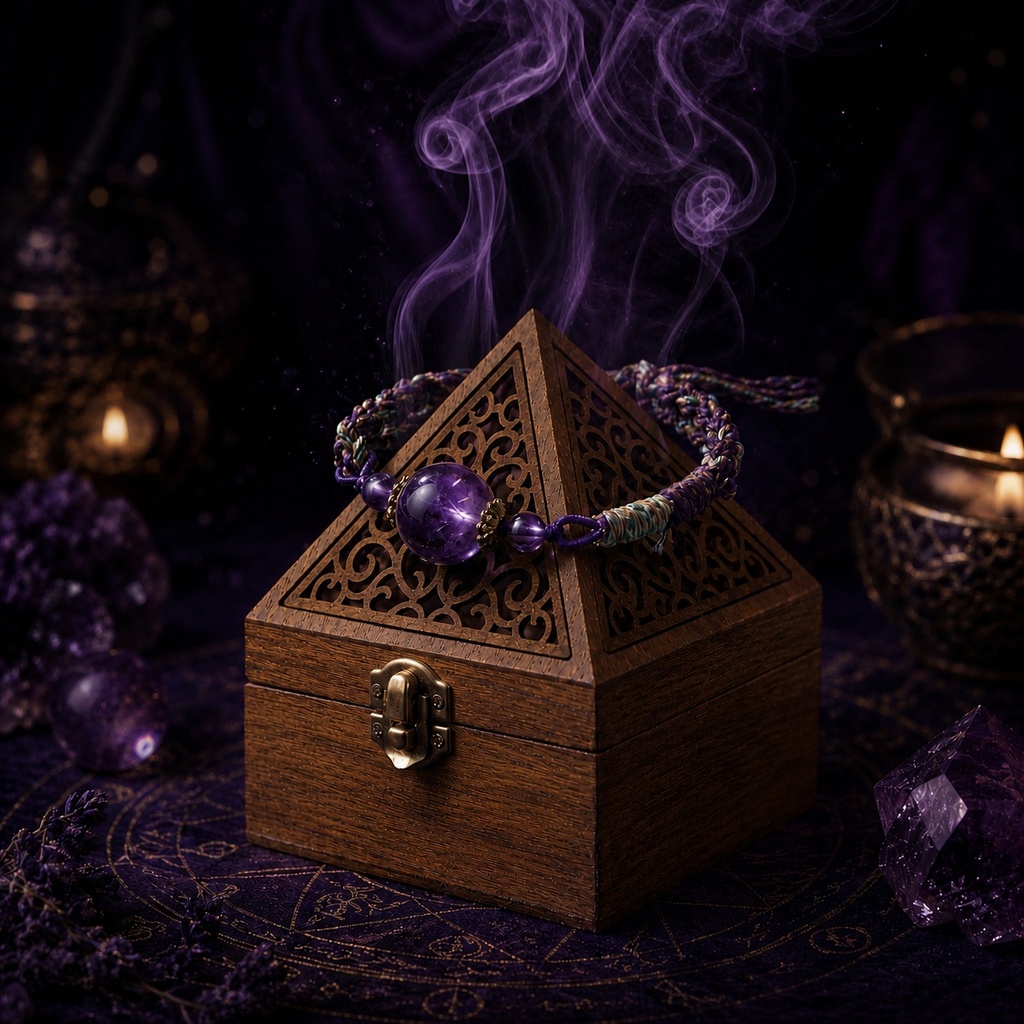
There is a small moment that happens when you pick up a piece of handcrafted jewelry for the first time. You notice the weight of it. You turn it over. You find a knot, or a slight difference in the way one bead catches the light compared to the next. Nothing is shouting for attention, and yet the piece feels like it was made by a person rather than produced by a process.
That feeling is not sentimental exaggeration. It comes from real, visible details: braided cords tied by hand, natural stone variation that shifts from piece to piece, and small-batch runs where someone actually looked at what they were making. Together, those details change the way jewelry sits in your life. It stops being an accessory you grab on your way out the door and becomes something closer to a companion.
If you have ever wondered why a handwoven crystal bracelet feels so different from a mass-produced one that looks almost identical on a screen, the answer comes down to three things: the cord, the stone, and the scale.
Why Handcrafted Jewelry Carries a Different Kind of Weight
Mass production is remarkable at one thing: sameness. Every unit matches the last one exactly, which is useful for some products and quietly flattening for others. Jewelry lives on the body. It touches skin, it catches light, and it gets noticed by you more than by anyone else. When something sits that close to you, sameness can start to feel a little hollow.
Handcrafted jewelry works the opposite way. A maker chooses a cord and pulls it through their fingers. They decide how tightly to braid. They check the clasp twice. They set aside a stone that feels off. All of those small decisions leave traces, and those traces are what your eye reads as warmth.
This does not mean handmade pieces are flawless. Often they are the opposite. The slight irregularity in a handwoven band is exactly what makes it feel alive. A machine makes perfect. A person makes personal.
Shop the Sorvara ritual
The Quiet Work of Braided Cords and Handwoven Details
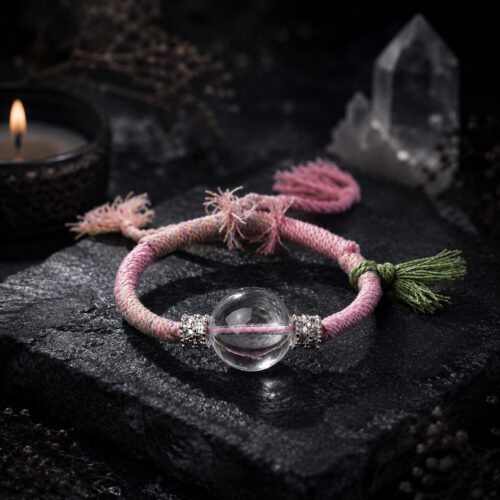
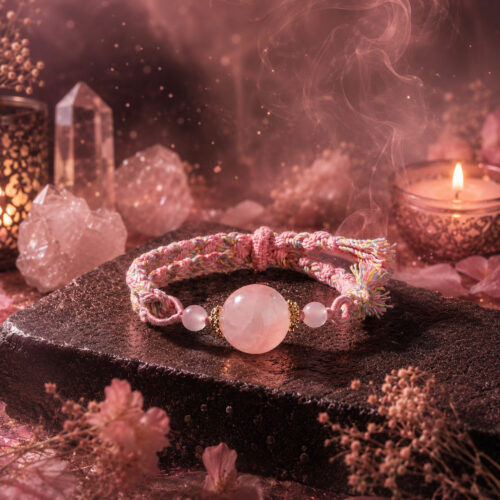
Braided cord is one of the oldest jewelry techniques there is, and it is still one of the most telling. A braid has to be consistent enough to hold, but it is never truly uniform when it is made by hand. The tension shifts slightly. The pattern breathes. You can run your thumb along a handwoven band and feel where the maker’s attention was steady and where they adjusted.
There is a practical side to this too. Hand-knotted and braided cords tend to be gentler on the wrist and easier to adjust than rigid metal links, which makes them comfortable for all-day wear. They soften over time instead of scratching. And because the cord is a design element rather than a hidden component, it becomes part of the color story of the piece.
What a Knot Tells You That a Machine Cannot
A hand-tied knot is a small signature. On a piece like the Return to Zero handwoven obsidian bracelet, the dark cord and the stone work together: the braiding gives structure, the obsidian gives depth, and the whole thing reads as deliberate rather than decorative. The same is true of Rose Memory, where a handwoven band in soft rose tones keeps a classic stone feeling modern and easy to wear.
Those details matter because they are the ones you actually notice over months, not minutes. The first time you wear a piece, you notice the color. The hundredth time, you notice the cord.
Natural Stone Variation: Why No Two Pieces Look Exactly Alike
If you have ever ordered two of the same crystal bracelet and been surprised that they were not identical, that is not a flaw in the process. That is the point. Natural stone forms over long stretches of time with minerals, pressure, and heat involved. The result is banding, cloudiness, tiny inclusions, and shifts in tone that no two stones share.
In clear quartz, that might look like a faint internal veil or a soft rainbow caught at an angle. In amethyst, it can mean one stone reads lilac while another leans deep violet. In obsidian, you might see a glossy black surface with almost no visible texture at all. None of this is damage. It is geology, and it is why a piece of natural stone jewelry belongs to you and no one else in quite the same way.
How to Read the So-Called Imperfections
- Inclusions: small natural marks inside the stone, often visible in clear quartz and amethyst. They are a record of how the stone formed.
- Color shift: a bead that is slightly deeper or lighter than its neighbor, common in rose quartz, amethyst, and blue-toned stones.
- Surface texture: a subtle variation in polish, or a natural vein that catches light differently depending on the angle.
- Size variance: hand-strung beads may differ by a fraction of a millimeter, which is why handwoven pieces drape slightly differently on every wrist.
If you are choosing a piece as a gift, this is actually a selling point. You are not handing someone a duplicate. You are handing them the one that arrived in their hands.
Small-Batch Jewelry and the Feeling of Being Considered
Small-batch production changes the math of a piece. When a design is made in limited runs, each one gets more attention. Stones are sorted by hand, cord colors are matched, and the finishing is checked before anything is packed. There is also less pressure to chase trends, which is why small-batch jewelry often looks less dated a few years later.
For a brand like Sorvara, that approach is part of the whole idea: jewelry can be beautiful and symbolic and part of a small daily ritual, without needing to be loud about it. A Bubble Cloud clear quartz bracelet is simple enough to wear with anything, and it is also the kind of piece people quietly reach for on mornings when they want a reminder to slow down and think clearly.
Small-batch also means fewer pieces exist. Not in a scarcity-marketing way, just in a real way. If you fall in love with something, you are less likely to see it on five other people at the same table.
How to Style Handcrafted Pieces So They Feel Like Yours
Handcrafted jewelry layers well because it does not fight for attention. The texture of a braided cord, the variation of the stone, and the slightly organic silhouette all sit comfortably next to other pieces.
- Start with one anchor piece. Choose the piece you want to be the center, whether that is a choker, a pendant, or a bracelet, and build outward from there.
- Mix textures, not just colors. A smooth stone pendant next to a knotted cord bracelet creates more interest than two identical finishes.
- Keep the palette in one family. Warm gold tones sit beautifully with rose and amber, while cool tones pair with blue, violet, and clear quartz. The Golden Hour Choker layers well with warm neutrals, and the Still Blue Choker works with denim, white, and soft gray.
- Let one piece carry the story. If you are wearing a symbolic pendant like Inner Cosmos, keep the rest of your stack quiet so it can do its job.
If you prefer sets that already do the layering work for you, a coordinated option like the Bubble Cloud Set or The Golden Triptych takes the guesswork out of matching tones.
Turning a Piece Into a Personal Ritual
One of the nicest things about handcrafted jewelry is that it invites a small ritual. Not a complicated one. Just a moment. Putting on a bracelet before you start your day. Taking a pendant off at night and setting it on a dish. Lighting incense while you get ready, so the room smells like the version of yourself you are trying to be that day.
Many people choose crystal jewelry for symbolic reasons rather than practical ones. Clear quartz is often chosen as a reminder of clarity. Obsidian is traditionally associated with letting go and starting fresh. Amethyst is often kept for quieter evenings. None of that is a promise about outcomes. It is meaning you assign, which is exactly what makes it personal.
If you want to build that moment out a little more, a Still Fire ceramic incense burner or the Pyramid Pine Wood Incense Burner can turn a bedside table or desk corner into a place where the ritual actually happens.
Choosing a Handcrafted Piece That Will Still Mean Something Next Year
When you are deciding what to buy, for yourself or as a gift, a few questions help narrow things down:
- Does the cord or band feel considered, or is it just a way to attach the beads?
- Do you like the stone’s natural variation, or does it bother you? If you want perfect uniformity, a natural stone piece may not be the right fit.
- Can you picture wearing it on an ordinary Tuesday, not just a special occasion?
- Does it connect to something you are actually working on, like patience, softness, or starting over?
Gifts land differently when they are chosen this way. A handwoven piece like Violet Heart or a layered set like The Story in Three Parts reads as thoughtful rather than generic, because the details carry the message for you.
And that is really the whole case for handcrafted jewelry: it holds evidence of care. A braided cord, a stone that only exists once, a run small enough that someone handled it. Those are quiet things, but they are the reason a piece can feel less like something you bought and more like something that belongs to you.
Where to Begin With Handcrafted Jewelry
You do not need a full collection to start. One piece you genuinely love, worn often, does more than five pieces you forget about. Choose something that matches the rhythm of your real life: a soft weekend bracelet like Slow Sunday, or a bracelet you reach for on days you want to reset.
If you are ready to find a piece that fits your own small rituals, take a slow look through the handcrafted collection at Sorvara. Notice the cords. Notice the stones. Let one of them feel like yours.