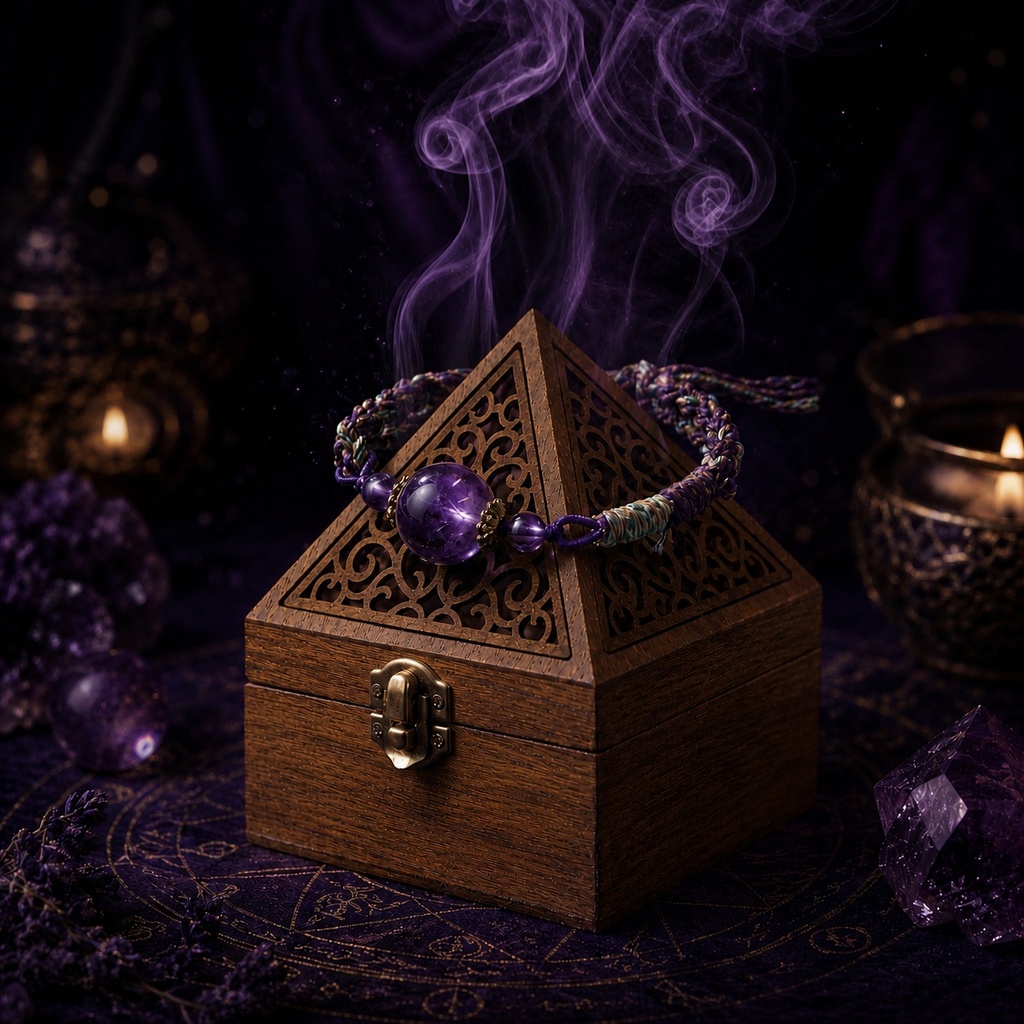
There is a particular pleasure in finding a piece of jewelry that seems to have been made for you and no one else. Not because it was custom ordered, but because the stone has a small cloud inside it, the cord sits slightly irregular against your wrist, and the color shifts depending on whether you are standing in morning light or under a lamp at night. That is what handcrafted jewelry offers. Not perfection, but presence.
Mass-produced jewelry is remarkable in its consistency. Every unit matches the next, which is exactly what makes it so easy to forget. Handmade pieces work the other way. Natural stone variation, hand-braided cords, and small-batch production all introduce tiny differences, and those differences are what turn an accessory into something you reach for every single morning.
This is the quiet logic behind the pieces at Sorvara: jewelry that is beautiful, personal, symbolic, and simple enough to fold into a small daily ritual. Here is why handcrafted details read as more personal, and how to choose pieces that will feel that way to you.
What Handcrafted Really Means in a Piece of Jewelry
Handcrafted does not mean flawless, and it is not a polite word for expensive. In practice, it means a person handled the piece at several points: choosing the stones, checking the drill holes, threading and knotting the cord, adjusting the length by hand, and deciding which bead belongs beside which. Machines are fast and identical. Hands are slower and specific.
That difference shows up in small ways. A handwoven bracelet often has slightly uneven spacing between knots, because tension changes as a maker works through a strand. A pendant may sit a millimeter off center, which is often exactly why it catches the light the way it does. Stones are picked individually rather than scooped from a bin, so a bracelet might include a bead with a soft white inclusion that an automated filter would have tossed aside. That bead is frequently the one you end up loving most.
The Details You Notice Without Knowing Any Jewelry Terms
You do not need a technical vocabulary to feel the difference. You notice it when:
- The cord has a slight give and softens against your skin instead of staying stiff.
- A stone holds a faint internal pattern that changes when you tilt your wrist toward the light.
- The finishing knot looks deliberate rather than stamped out in a factory line.
- The piece feels a little warmer or lighter than expected, because natural materials behave differently than heavily coated ones.
None of this is dramatic. It is the kind of detail that accumulates quietly over months of wearing, until a piece stops being an accessory and becomes part of your routine.
Shop the Sorvara ritual
Natural Stone Variation in Handcrafted Jewelry: Why No Two Beads Match
Every natural stone carries the conditions it formed under: minerals, pressure, time, temperature. That history shows up as color banding, tiny internal clouds, hairline veins, and small differences in translucency. Two beads cut from the same source can still look like distant cousins.
In mass production, this variation is treated as a problem to be solved through sorting, coating, and dyeing. In small-batch work, it is the entire point. When a maker strings a bracelet, they are arranging differences: a paler stone beside a deeper one, a cloudy bead next to a clear one, so the finished piece has depth instead of flatness.
This is also why a handcrafted bracelet photographed online may arrive looking slightly different from the image, and why that is not a flaw. It is the honest behavior of natural material. If you have ever chosen a piece because of the way one specific stone looked, you already understand. The stone in your hand is the stone you got, and no one else has its exact twin.
How to Choose a Stone You Will Still Love in a Year
A few gentle guidelines help. Look for product photos taken in natural light rather than heavy studio filters, since those show the true depth of color. Expect a slight shift between what you see on a screen and what arrives in the mail, especially with blue and violet tones. And if you happen to prefer a more uniform look, choose a design where the beauty comes from silhouette and layering rather than one dramatic hero stone, like the clear quartz pieces in the Bubble Cloud Set, which read clean and quiet against almost everything in your closet.
Braided Cords and Knots: The Slower Work Behind a Handwoven Bracelet
There is a reason handwoven pieces feel different on the wrist, and it has almost nothing to do with how they look in a photograph. Braiding and knotting by hand creates a cord with subtle variation in tension. Some sections sit a touch tighter, others a touch looser, and the result is a band that moves with you instead of against you.
Hand-knotting is also one of the oldest ways to connect beads without metal. Between each stone, a small knot can be tied to hold it in place, which protects the stones from rubbing against one another and gives the strand a soft, fluid drape. It takes far longer than threading a wire through a row of beads. It is also the reason a handwoven bracelet tends to feel like fabric rather than hardware.
Why a Hand-Tied Cord Feels Different on the Wrist
If you wear a hand-knotted bracelet for a full day, you will probably notice three things. It does not dig in at the edges. It does not rattle. And it warms to your skin within minutes, because the cord and the stone are absorbing your body heat rather than reflecting it back.
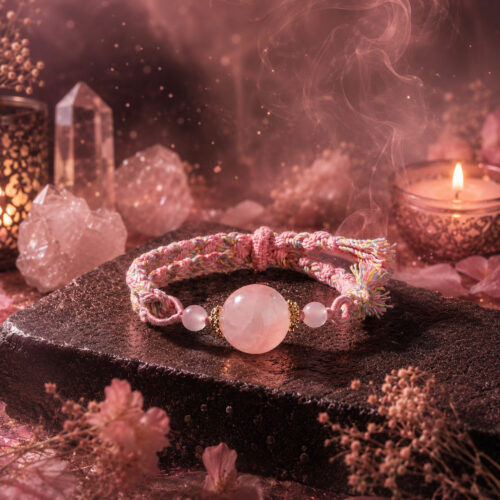
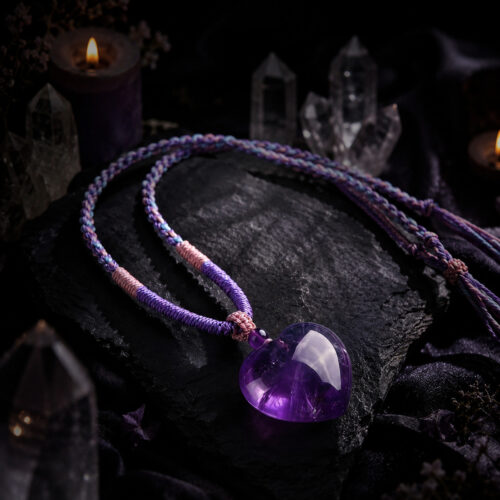
Pieces like Rose Memory show this clearly, with soft rose-toned stones handwoven into a strand that feels more like a ribbon than a band. Violet Heart takes the same approach in a deeper, more evening-leaning palette. And if you are drawn to darker, grounding tones, Return to Zero uses handwoven construction with obsidian, a stone traditionally associated with fresh starts and the closing of a chapter.
Small-Batch Jewelry and the Feeling of Being Considered
Small-batch means a design is made in limited runs, often in a small studio rather than a sprawling facility. Practically, that changes what is possible. A maker can adjust a length by half an inch because someone has a narrow wrist. They can notice that one batch of stones came in a little warmer in tone and pair them differently. They can stop making a design when the materials run out instead of substituting something close enough.
What you feel as the wearer is subtler than any of that. It is the sense that someone thought about the piece before you ever saw it. That feeling is hard to manufacture and easy to recognize, and it is part of why small-batch pieces tend to stay in rotation long after trendier things have been reorganized to the back of the drawer.
It also changes how you buy. Instead of chasing a new piece every season, small-batch collecting tends to be slower and more deliberate. You might add one warm, everyday strand like Slow Sunday, then later a symbolic pendant like Inner Cosmos, and slowly build a small collection where every piece has a reason for being there.
How to Style Handcrafted Jewelry So It Feels Like Yours
Handcrafted pieces are forgiving to style because they already carry texture. The goal is not to match everything perfectly. The goal is to let one or two pieces do the talking while the rest of your outfit stays quiet.
Layering Without Losing the Story
- Keep to one metal family per look. Warm gold tones together, or cooler silver and blue tones together, reads more intentional than mixing everything.
- Mix one woven bracelet with one smoother chain, so the textures have something to play against.
- Let a pendant sit slightly lower than a choker for a layered neckline that still feels uncluttered.
- Choose a color story rather than a theme. Ocean blues, violet evenings, and soft blush each create a mood without requiring an explanation.
- Wear the piece you are drawn to that morning, not the one that technically completes the outfit. Personal style is mostly just attention.
If you love warm tones, a layered set like The Golden Triptych does the coordinating work for you. For a calmer, cooler palette, the Still Blue Choker layers easily with silver and denim. And if you like a piece with a bit more color and movement, Aurora Wild brings a livelier mix of tones to an otherwise simple outfit.
Choosing a Handcrafted Piece for Someone Else
Handmade jewelry makes a generous gift precisely because it is not generic. If you are buying for someone whose taste you know well, start with the colors they already wear most. If you are buying for someone in the middle of a change, a new job, a move, a fresh start, a piece with a soft symbolic thread often lands better than something purely decorative. It gives them something to wear on the days that feel uncertain, without anyone needing to explain why it matters.
Wear It Slowly: A Gentle Place to Begin
You do not need a large collection to enjoy handcrafted jewelry. One bracelet that fits your wrist properly, one pendant that means something to you, and one small ritual around putting them on is enough to change how a morning feels. Slip the bracelet on after you get dressed. Let the pendant settle against your collarbone. Take three slow breaths before you open your laptop.
If you want to build that ritual out a little further, scent is a natural companion. Lighting a stick of incense while you dress is a simple way to mark the transition from sleeping to waking, and a quiet holder on a dresser or desk makes it easy. The Pyramid Pine Wood Incense Burner suits a calm, uncluttered corner, while the Still Fire ceramic burner fits a warmer evening reset.
None of this is about guarantees or outcomes. It is about attention. Handcrafted jewelry asks for very little and gives back a surprising amount: a small, daily reminder that you chose this, that it was made by hand, and that it is yours alone.