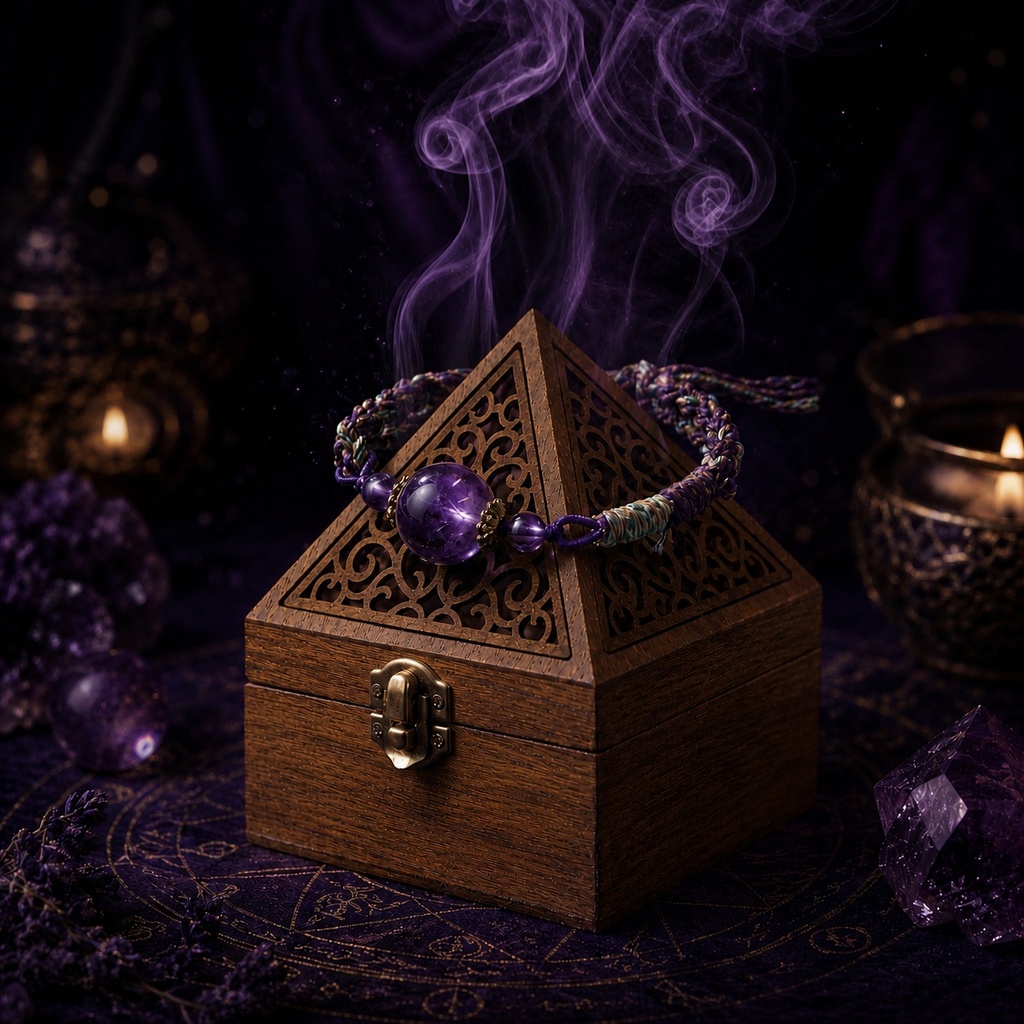
There are evenings when you can feel the day still clinging to you — the emails, the errands, the low hum of everything you meant to get to and didn’t. You don’t need a weekend retreat or a total life overhaul to come back to yourself. You need a few quiet minutes, one small corner of a room, and a short sequence of gestures that tell your body the day is finished.
That is really all simple cleansing and reset rituals are: gentle, repeatable actions that mark an ending or a beginning. A bowl of cool water. A lit stick of incense. A bracelet slipped off your wrist and set down with care. None of it is complicated, and none of it has to be performed perfectly. The point is not the choreography — it is giving yourself a moment that belongs entirely to you.
Below, we’ll build a reset practice around three quiet anchors: crystal jewelry, incense, and one small intentional space. You can do the whole thing in about ten minutes, or borrow a single piece of it on a night when ten minutes feels like a lot.
What a Reset Ritual Is — and What It Isn’t
A reset ritual is a container. It’s a set of actions you repeat often enough that your body starts to recognize them, the way it recognizes the sound of a kettle or the smell of rain. Over time, the gesture itself becomes the signal that we are slowing down now.
What it isn’t is a fix. Rituals don’t cure anything, solve anything, or guarantee a particular outcome. Crystals are not medicine, and incense is not a treatment. What these objects can do is hold meaning for you. A stone can serve as a reminder of something you decided. A scent can anchor a memory of calm. That’s a real and useful thing — it’s just a human thing, not a medical one.
Many people who keep crystal jewelry describe it as a small daily touchpoint: something to hold, notice, or reset their attention with. Amethyst is traditionally associated with quiet and evening reflection, clear quartz with clarity and simplicity, obsidian with the idea of a clean slate. You can take those associations or leave them. What matters is what the piece means in your own hand.
Shop the Sorvara ritual
-
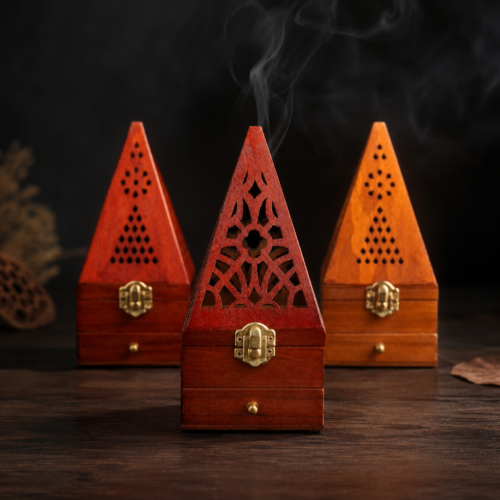
Incense Burner
Pyramid Pine Wood Incense Burner, Vintage Hollow Aroma Holder Box, Decorative Desktop Zen Ornament
Price range: $45.00 through $49.00ClearHigh Triangle Red Pine Wood 1High Triangle Red Pine Wood 2High-triangular yellow pine woodShort-trunk red pine wood
Start With One Small Intentional Space
You do not need a dedicated meditation room. A nightstand, a corner of a dresser, a shelf beside a window, or the edge of a desk will do. What you’re creating is not decor — it’s a location your attention learns to visit.
Keep it small and specific
The most sustainable spaces are tiny. One tray. Three objects. A surface you already pass every day, so the ritual doesn’t require a special trip through the house.
- Something that holds scent — an incense burner or a small dish
- Something that holds meaning — a piece of jewelry you take off or put on there
- Something that holds light — a candle, a small lamp, or simply the window
Clear it before you style it
Before you arrange anything, wipe the surface down. Move the clutter — the receipts, the charger cables, the half-finished glass of water. This step is the actual cleansing part of the practice, and it takes ninety seconds. You are not just tidying; you are making a decision about what belongs in your quiet corner.
Let it stay imperfect
A space that requires constant maintenance becomes one more thing to fail at. If a little dust gathers, that’s fine. If the tray shifts, that’s fine. The space is there to serve the ritual, not the other way around.
Cleansing Your Crystal Jewelry, Gently
If you wear crystal jewelry often, you’ll eventually want to refresh it — partly to keep it physically clean, and partly because the act of caring for it feels good. Both reasons are valid. Here are the simplest, safest approaches.
A five-minute water rinse
For most crystal beads and pendants, a brief rinse under cool running water is enough. Hold the piece, let the water move over it, and take the moment to notice what you’re doing. If you like, set an intention while you rinse — something small and concrete, like “I’m starting this week clear.”
Pat dry with a soft cloth and let the piece air-dry fully before you wear it. Water is not a magical solvent, and it doesn’t remove anything invisible. What it does is give you a physical gesture that matches an internal one, which is why the rinse tends to feel like more than a rinse.
When to skip water entirely
Not every piece loves water. Soft stones, glued settings, silk or cotton cord, and hand-knotted bracelets are often better served by a dry approach. Check the construction of your piece before you dunk it.
Dry, smoke, and sound methods
If water isn’t right for your jewelry, these alternatives work beautifully and take about the same amount of time:
- Dry cloth — wipe the piece with a clean, soft cloth while holding a single thought or intention.
- Smoke — pass the jewelry briefly through the gentle drift of incense smoke. Keep it quick; a few seconds is plenty.
- Sound — rest the piece somewhere quiet and ring a bell, chime, or singing bowl nearby. Many people find the vibration soothing to sit with.
- Rest — simply let the jewelry sit on your small tray overnight, unworn. Sometimes a pause is the whole ritual.
None of these methods is better than another. The right one is the one you’ll actually do.
Incense as the Signal That the Day Is Closing
Incense has been part of household and devotional practice for centuries — in temples, in family shrines, in small apartments on an ordinary weeknight. Its power is sensory and immediate. Within seconds of lighting a stick, the room smells different, and different is enough to mark a threshold.
If you’re new to it, a simple setup is easiest: a burner that holds the stick upright, a lighter, and one scent you genuinely enjoy. The Pyramid Pine Wood Incense Burner is designed for exactly this kind of quiet corner — a small, warm object to keep on your tray so the ritual is always within reach. If you prefer a ceramic look, the Still Fire burner has a calmer, more grounded feel that suits evening resets especially well.
A simple incense reset, step by step
- Open a window a crack, even in winter. Fresh air is part of the reset.
- Set the stick in the burner and light the tip. Let the flame catch, then blow it out gently so it smolders.
- Stand still for a minute. Watch the smoke instead of your phone.
- Say or think one sentence about what you’re setting down from today.
- Let the stick burn out on its own, or extinguish it safely in the burner when you’re done.
Never leave burning incense unattended, and keep it away from fabric, paper, and anything that could catch. A reset ritual should feel calm, which means it should also be safe.
Let Your Jewelry Carry the Intention
The third anchor is the one you wear. Crystal jewelry works well in a reset practice because it moves through your day with you — it’s a reminder that travels.
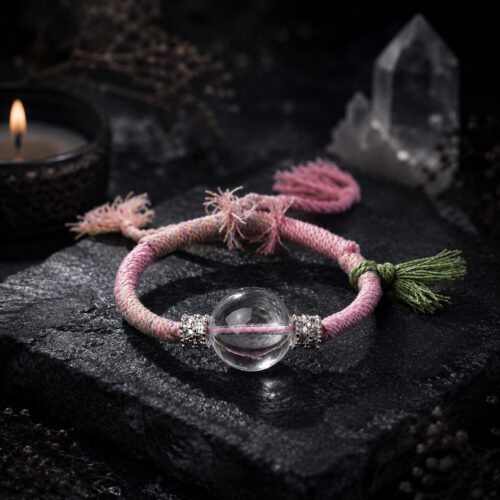
Some people choose a piece for the beginning of something. A clear quartz bracelet like the Bubble Cloud is often chosen for simple, everyday clarity, and it layers easily if you like stacking. Others prefer something for the closing of a chapter: an obsidian piece such as Return to Zero is traditionally associated with clean slates and starting over, which makes it a natural fit for a reset.
You can also build the ritual into the act of taking jewelry off. Before you set your bracelet or necklace on the tray for the night, hold it for a breath and think of one thing you’re grateful for from the day, or one thing you’re finished with. That’s it. Ten seconds, and the piece becomes a small record of the choice you made.
If you’d like something to wear as a soft daily reminder rather than a reset object, a warm, simple piece like Slow Sunday can sit at the center of a weekend ritual — coffee, an open window, and nothing urgent on the calendar. And if you’re drawn to the idea of an inner-world anchor, the Inner Cosmos pendant is often chosen as a symbolic piece for exactly that.
A Ten-Minute Reset You Can Actually Keep
Here’s a complete version you can run tonight. Adjust freely — the order matters less than the repetition.
- Minute 1: Clear the surface. Move what doesn’t belong.
- Minutes 2–3: Light a stick of incense and set it in the burner. Open a window.
- Minutes 4–5: Take off your jewelry. Rinse the piece you wear most, or wipe it with a soft cloth.
- Minutes 6–7: Set the jewelry on the tray. Stand still and breathe while the smoke moves.
- Minutes 8–10: Sit down nearby with tea, a book, or nothing at all. Let the room stay quiet.
If you only have three minutes some nights, do the first step and the third. Clearing the surface and setting down your jewelry is a complete reset on its own.
Building a Practice You’ll Come Back To
The rituals that last are the ones that are easy to restart. You will skip nights. You will forget the incense, or leave the tray cluttered for a week. None of that undoes anything. A reset practice isn’t a streak to protect — it’s a place you can return to whenever you want to.
Start with one anchor: a burner, a bracelet, or a clear corner. Add the others only when they feel like a relief rather than a task. Over time, the smallest gestures — a lit stick, a rinsed stone, a clean surface — become a language you can use to tell yourself that the day is done and the next one hasn’t started yet.
If you’re ready to build your own quiet corner, the Pyramid Pine Wood Incense Burner and a piece like Return to Zero make a simple, grounded starting pair — one for the room, one for you.