

Jewelry Sets
The Violet Hours Dream Cord + Violet Hour Bracelet
$119.00
+ Free ShippingA note on natural variation:
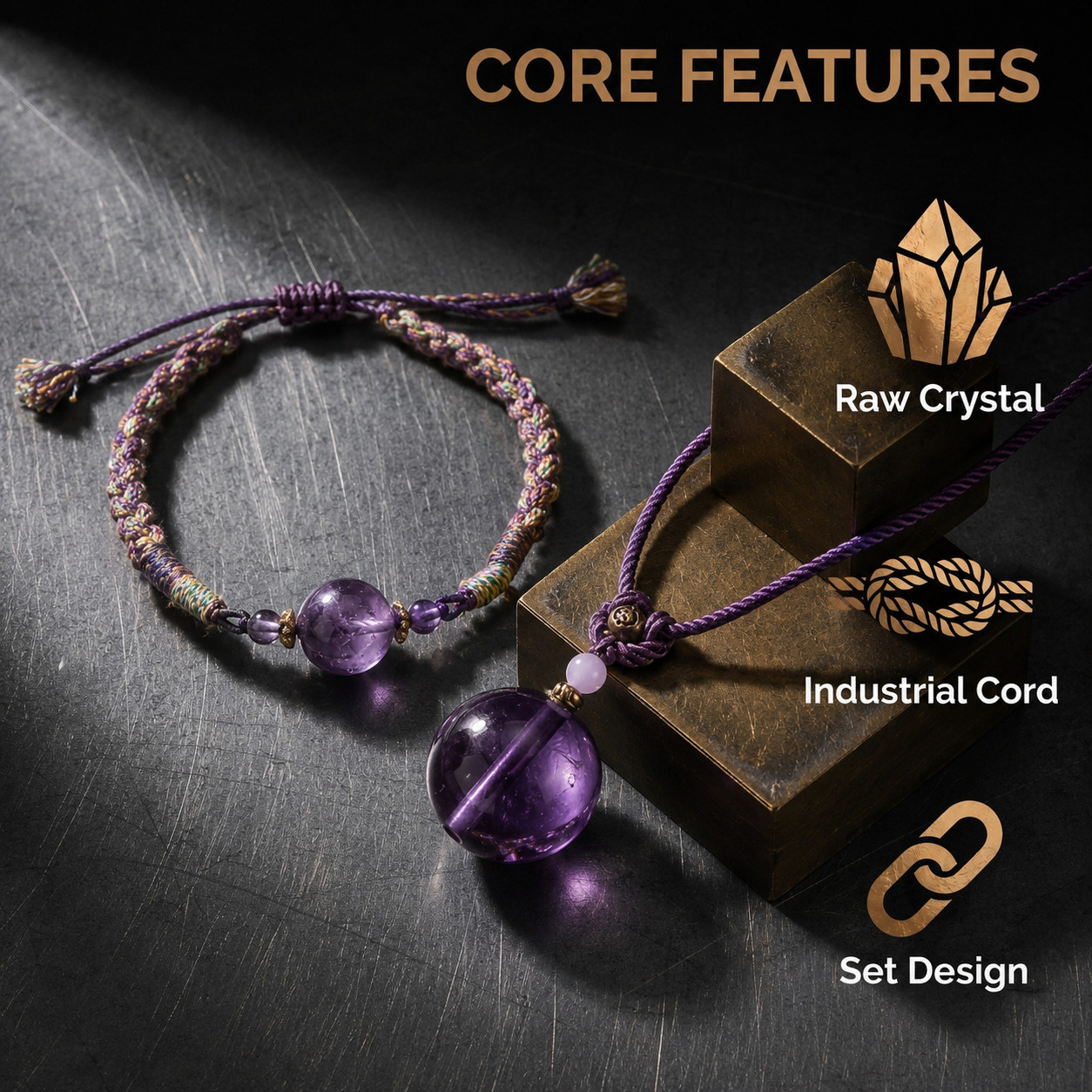
Every stone is natural — no two are identical in color, pattern, or internal character. Every cord is hand-braided — no two are exactly alike in texture or tassel spread. These differences are not imperfections. They are what makes your piece yours.
Description
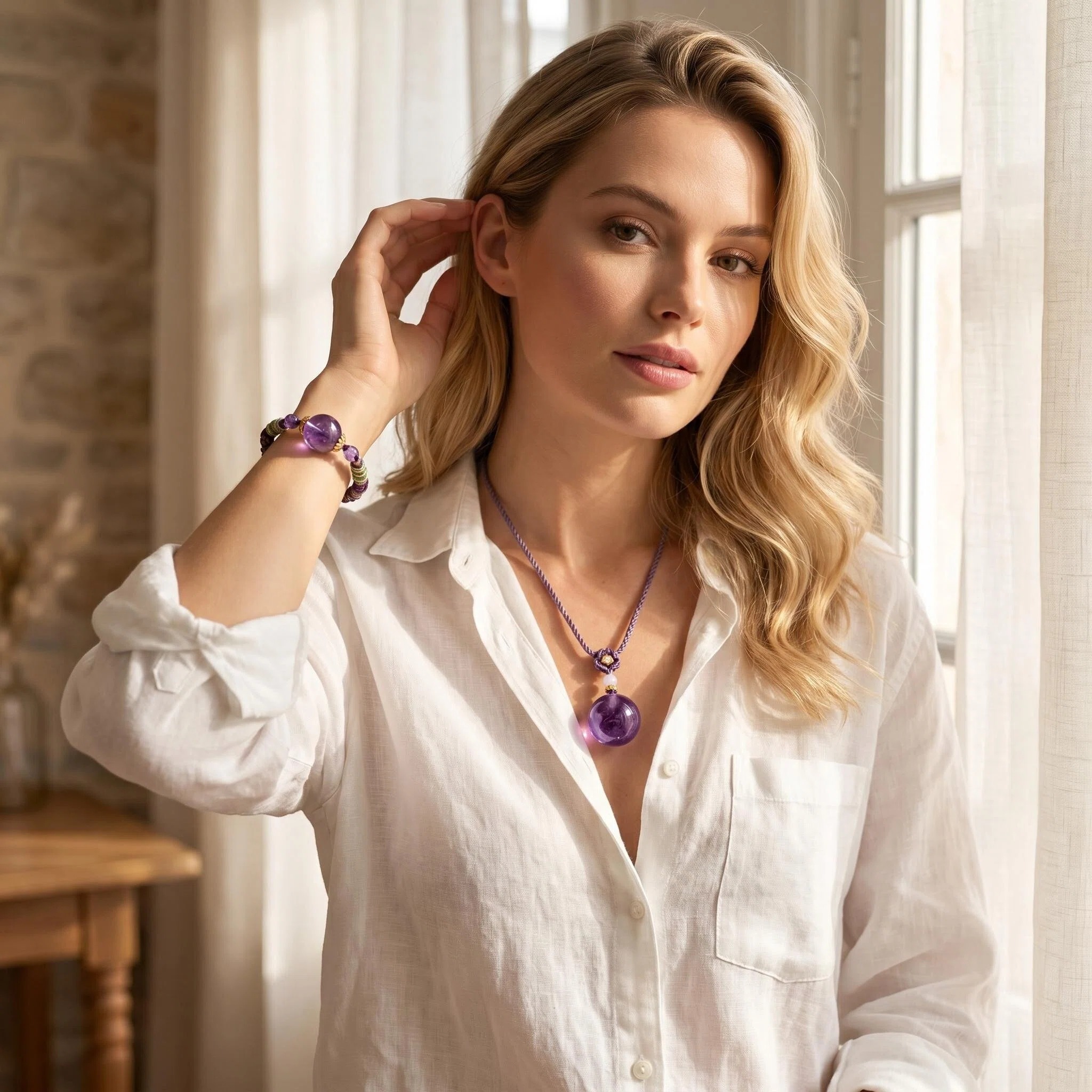
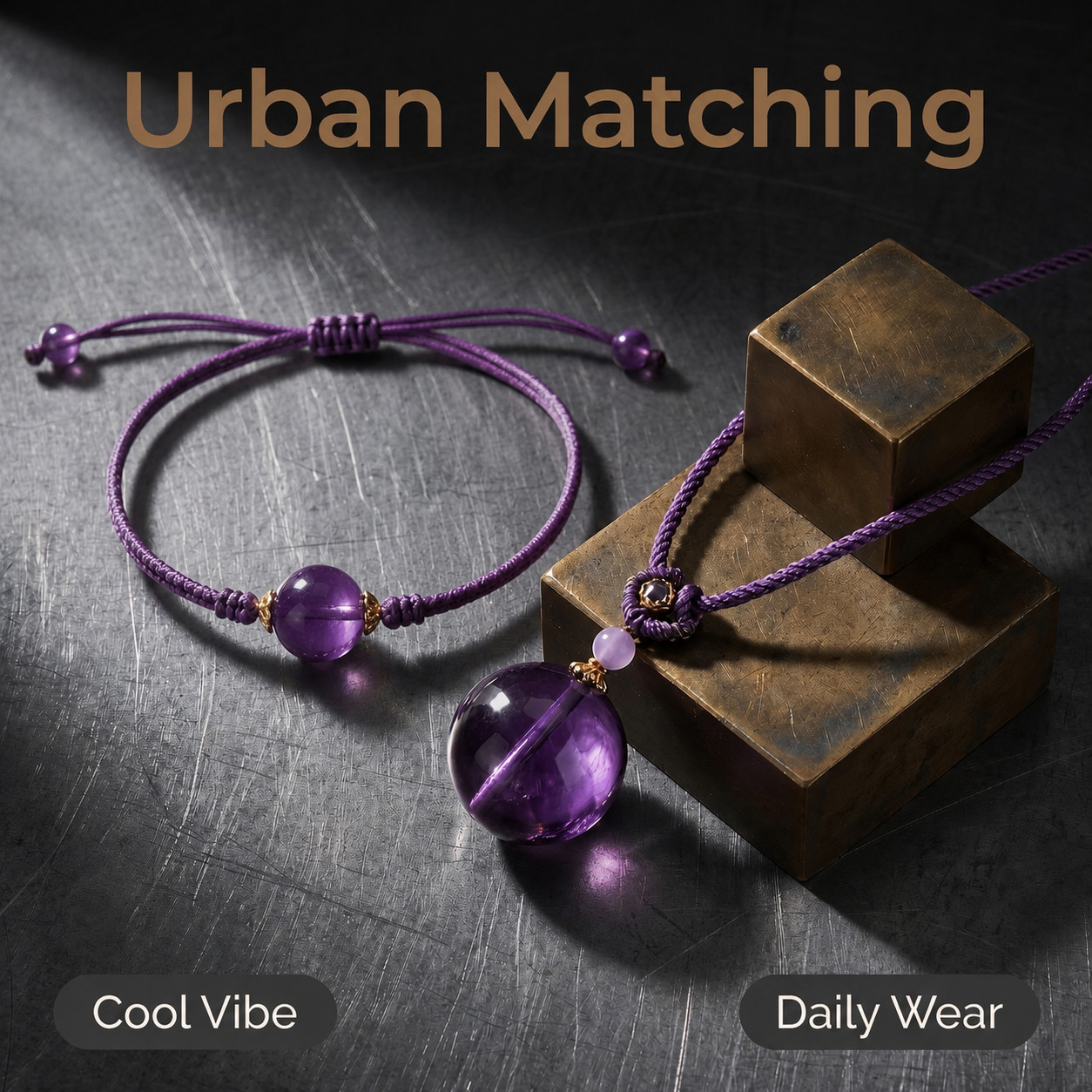
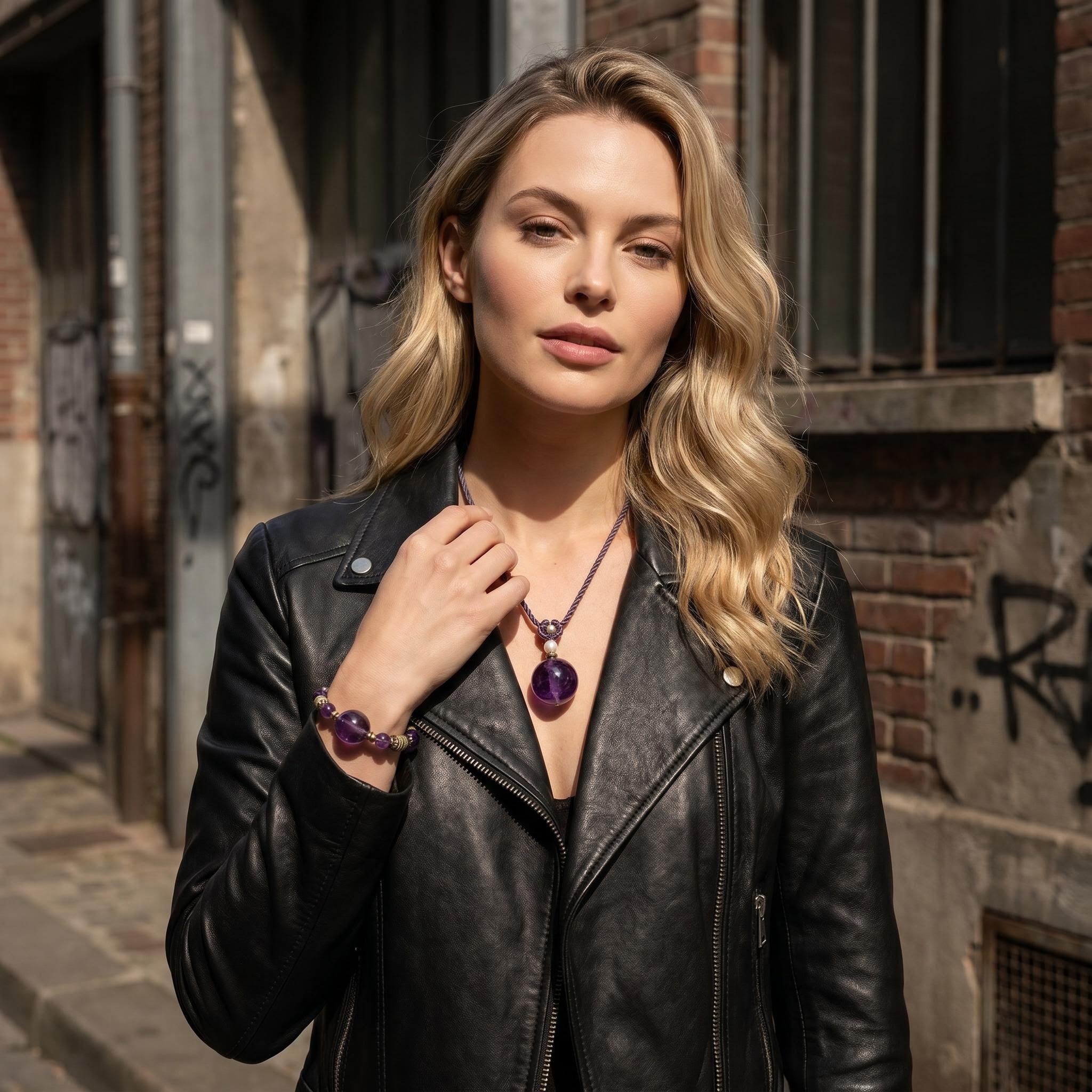
Amethyst at the chest — flowing, adjustable, present. Amethyst at the wrist — grounded, textured, felt with every movement. The same frequency of calm, worn at two different depths of the body.
For the days when you need stillness to be not just an intention but a physical presence.
Amethyst at the chest and the pulse,the things you are worried about will all pass.
27 reviews for The Violet Hours Dream Cord + Violet Hour Bracelet
27 reviews for The Violet Hours Dream Cord + Violet Hour Bracelet
1-5 of 27 reviews
Add a review
 The Violet Hours Dream Cord + Violet Hour Bracelet
Your review
* Review is required
Name
* Name is required
Email
* Email is required
Add photos or video to your review

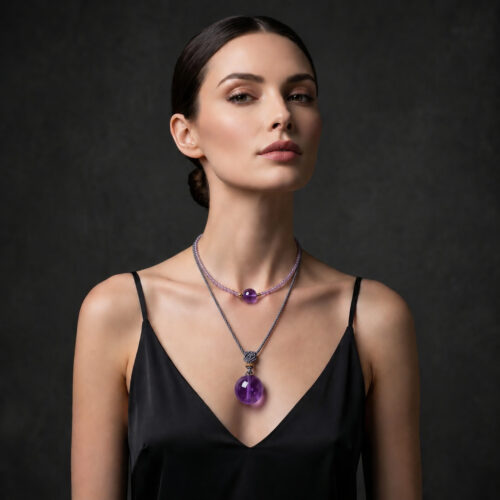

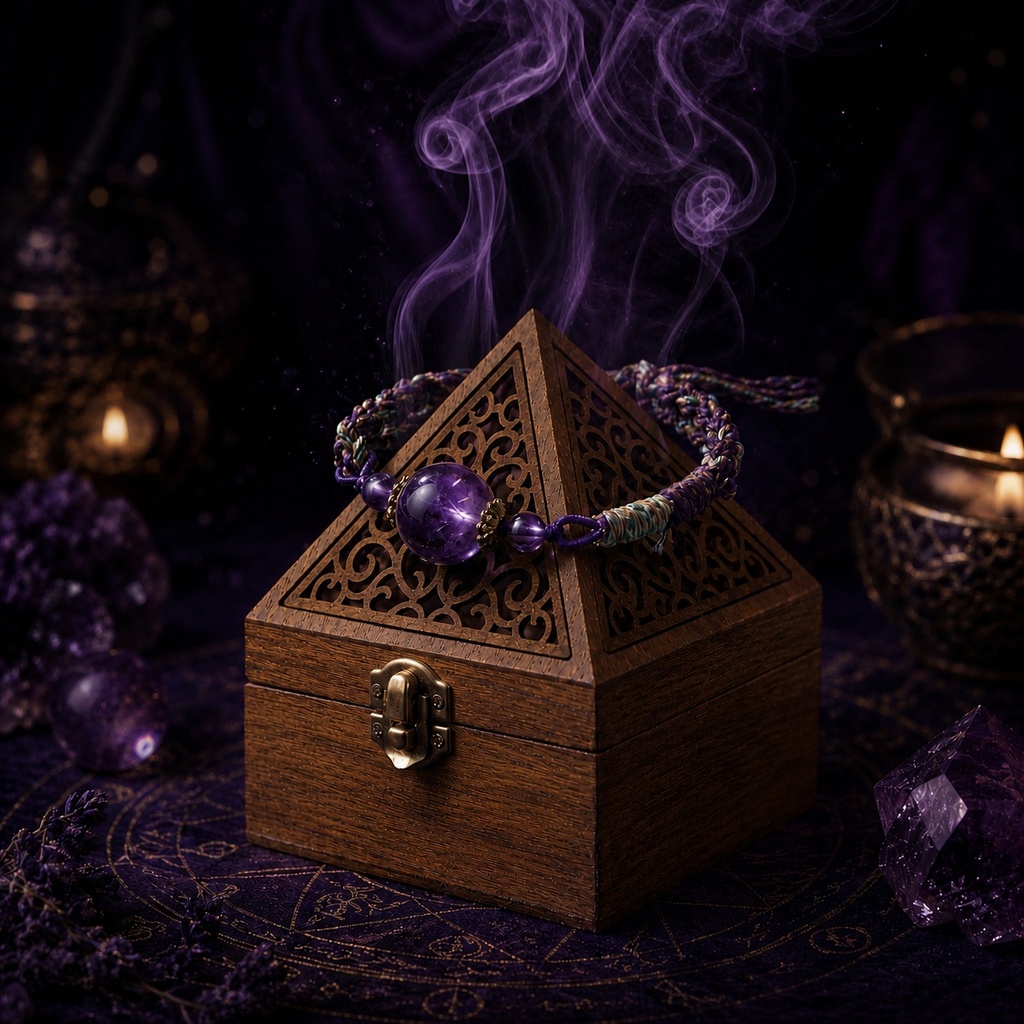
I bought this Violet Hours duo as a gift for my sister and ended up keeping it for myself — that’s how beautiful it is. The amethyst has a luminous quality that’s really striking, and the two pieces are perfectly matched in both color and style. The hand-braided cords are a detail that makes all the difference — they feel intentional and artisanal rather than an afterthought. It came packaged nicely and would honestly make a wonderful gift for anyone who appreciates natural stones and handmade jewelry. I wear the necklace almost daily and add the bracelet when I want to feel a little more dressed up.
This set is stunning. I was drawn to the purple tones and they’re even richer in person. The amethyst stones catch light beautifully without being flashy — it’s an elegant, understated sparkle. The hand-braided cords are soft against skin and the adjustable design means no worrying about sizing. I’ve worn these pieces to work, to dinner, to yoga — they somehow work for every occasion. The fact that each stone is natural with its own unique characteristics makes the set feel truly special, not like something mass-produced. I’m already eyeing another Sorvara set for my sister’s birthday.
This Dream Cord + Violet Hour Bracelet set exceeded my expectations. The amethyst pieces coordinate beautifully — wearing them together creates a really polished, intentional look. The hand-braided cord on each piece is soft and adjustable. I’ve gotten so many compliments already.
A minimalist’s dream. The pendant and bracelet set goes with literally everything I own.
This has quickly become my everyday staple. The natural amethyst feels substantial without being heavy, and amethyst sphere pendant with matching bracelet, hand-braided cords. I’ve worn it nonstop for two weeks and it still looks brand new. Definitely ordering more pieces from this shop.