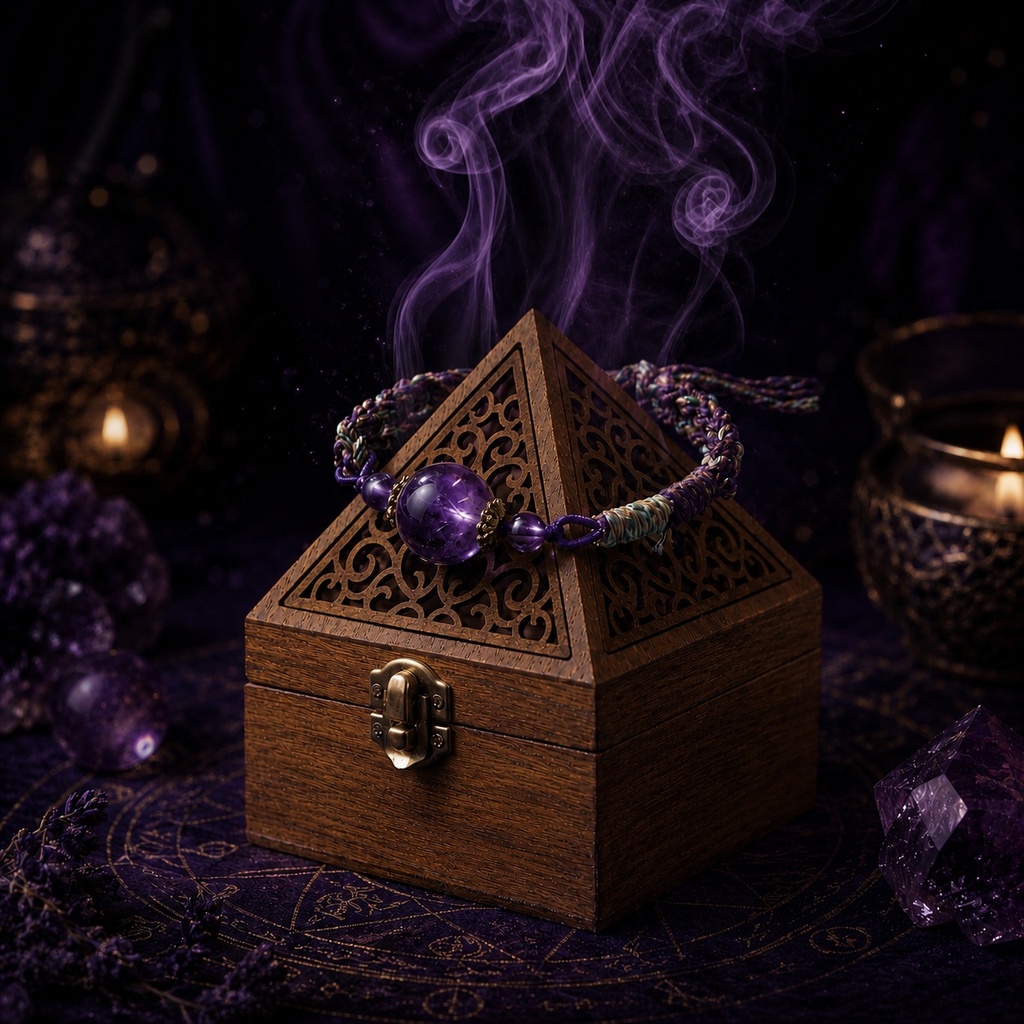
There is a moment, usually around seven in the morning, when you open a jewelry box and quietly decide who you are going to be that day. The outfit is already on. What is left is the small, satisfying question of color. Learning how to choose crystal colors is not about memorizing a chart or following rigid rules. It is about noticing what you already reach for, and then giving yourself a few more options.
Color is the first thing the eye registers, long before it registers shape or texture. That is why a single bracelet can shift how an entire outfit feels, and why a shade that never quite fits can sit unworn in a drawer for a year. The right color tends to disappear into your life. You put it on without thinking, and it works with everything.
Below are four lenses worth using: your wardrobe, your mood, the season, and your personal color palette. You do not need all four every morning. But when you are standing in front of a mirror undecided, one of them will usually give you an answer.
How to Choose Crystal Colors You Will Actually Wear
Before you think about symbolism, look at your clothes. Open the closet and count. Most of us wear three or four colors on repeat and treat everything else as an occasional guest. Those repeat colors are your safest starting point, because jewelry that works with your favorite pieces is jewelry you will actually put on.
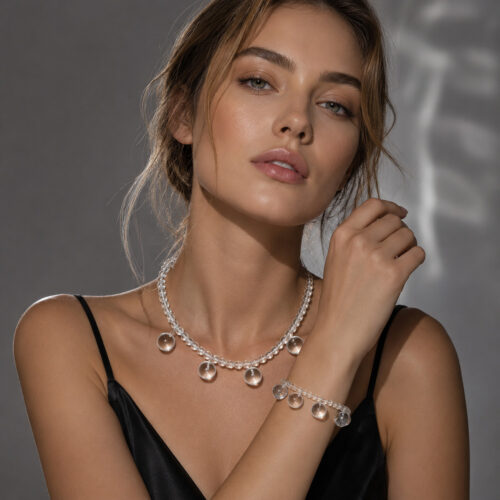
If your wardrobe leans neutral, cream, gray, navy, denim, and black, you have the most freedom. Clear quartz is the quietest choice and the easiest to layer. The Bubble Cloud Set pairs a clear crystal necklace with a matching bracelet, which makes it a simple way to build a small, cohesive color story without thinking about it twice.
If your closet is mostly warm, camel, rust, olive, cream, and gold hardware, lean toward honey, rose, and warm gold tones. If it is mostly cool, charcoal, slate, icy blue, and silver hardware, blue, violet, and clear crystal will feel more natural against your clothes.
A quick test: hold the piece against three of your most-worn tops. If it works with two of them, it belongs in your rotation. If it only works with one, it is probably a special-occasion piece, which is perfectly fine as long as you know that going in.
Shop the Sorvara ritual
Use Color as a Mood Cue, Not a Mood Fix
Many people choose crystal jewelry because a color feels like something they want a little more of in their day. That is a lovely way to use it, as a reminder, a small visual cue, a personal ritual rather than a promise. Blue is traditionally associated with calm and steadiness. Violet is often chosen for reflection and quiet evenings. Rose tones are frequently kept for softness and self-kindness. None of these will rearrange your circumstances. They can, however, change the tone of a moment.
- Quiet, low-key days: clear quartz, pale blue, soft gray-violet.
- Days with a presentation or a difficult conversation: deep blue or obsidian for a sense of steadiness.
- Evenings you want to slow down: violet, plum, deep indigo.
- Days that need warmth: honey gold, rose, amber, soft coral.
The Still Blue Choker is a good example of a mood piece that still behaves like a wardrobe staple. The blue reads calm without looking costumey, so it works with denim and with a blazer. If you want something deeper for evening, Lapis Night carries the same idea in a richer shade.
Dress the Season You Are Actually In
Seasonal color is not only about the calendar. It is about light, temperature, and the texture of your clothes. In bright months, thinner fabrics and stronger daylight tend to wash out deep, heavy shades and flatter lighter, more translucent ones. In colder months the opposite happens: wool, leather, and low light make saturated colors look rich instead of loud.
Spring and summer
Think pale pink, sea glass blue, clear crystal, soft lilac. These shades sit well against linen, cotton, and sunlit skin. The First Blush Choker is an easy warm-weather choice, and the ocean-toned Shallow Sea bracelet layers well into lighter stacks. If you like a little more play in your color, Aurora Wild brings a brighter, more expressive note to a simple summer outfit.
Fall and winter
This is the season for depth: violet, deep blue, amber, obsidian. Warm gold tones come into their own against knits and coats, and the Golden Hour Choker was practically made for late-afternoon light and a heavy sweater. The Return to Zero obsidian bracelet suits the same mood in a darker key, often chosen as a symbolic piece for resetting and starting fresh. For a softer winter alternative, Rose Memory keeps a rose quartz tone in the mix without feeling summery.
If you live somewhere with mild seasons, ignore the calendar and follow your light instead. Coastal gray mornings and desert afternoons call for very different colors.
Find the Shades That Flatter Your Own Coloring
Personal color palette is the lens most people skip, and it is the one that makes the biggest difference. You do not need a professional draping session to get the general idea. Two things matter most: undertone and contrast.
Undertone is whether your skin reads warm (golden, peachy, olive), cool (pink, bluish, ruddy), or neutral. A simple check is to hold gold and silver near your face. Gold tends to flatter warm undertones, silver tends to flatter cool ones, and if both look fine, you are likely neutral and can wear nearly anything. Contrast is the difference between your hair, skin, and eyes. High contrast, such as dark hair with light skin, usually carries saturated and deep colors well. Lower contrast tends to glow in softer, more blended shades.
This is why the same violet choker can look luminous on one person and slightly off on another. It is rarely the crystal. It is the pairing. If you love a color that sits outside your usual range, move it away from your face. A bracelet in a bold shade is far more forgiving than a choker, and it lets you enjoy the color on your own terms.
Test a New Color in Small Doses
If you are drawn to something outside your comfort zone, start small. A bracelet is the lowest-risk way to try a color, and it lets you see how a shade behaves across a whole week of outfits rather than in one mirror check.
- Wear the new color three days in a row and notice when you reach for it.
- Layer it with a piece you already trust, such as a neutral or a metallic, instead of wearing it alone.
- Pay attention to compliments, and to how often you catch yourself looking at your wrist.
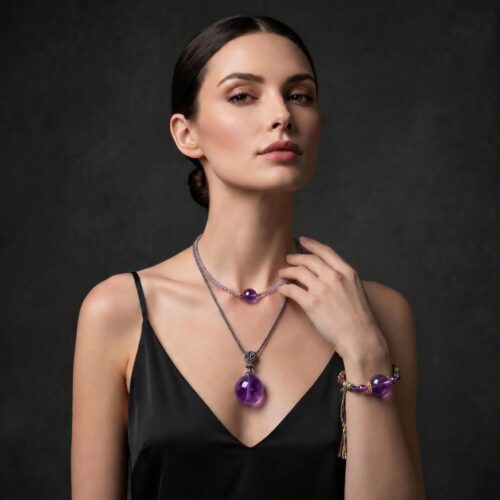
Layering is also where color gets interesting. A violet bracelet against a clear crystal necklace reads intentional rather than random. The Complete Violet does this in one step, pairing a violet choker with a matching cord bracelet so the color story is already resolved. If you would rather build your own, start with one saturated piece and keep everything else quiet.
A Small Color Story You Can Repeat All Week
The goal is not a drawer full of everything. It is a small, repeatable set: one neutral you can wear with anything, one color that matches your wardrobe, and one that is purely for you. That is usually enough to cover a week of mornings without decision fatigue.
It also helps to give the pieces a home. A shallow dish on a dresser, or a quiet corner with the Pyramid Pine Wood Incense Burner, turns putting jewelry on into a two-minute ritual instead of a scramble. Some people like to set out the next day’s piece the night before, a small act of care that makes the morning easier. Others prefer to close the day that way, with the Still Fire ceramic burner lit and the day’s jewelry set down.
Start with the colors you already love, then let one new shade in at a time. Notice what you wear on repeat, think about the season you are actually in, and choose a piece that makes an ordinary Tuesday feel a little more considered. Sorvara’s handcrafted jewelry is made to be worn often, layered slowly, and kept for years, and the right color is simply the one you will still want to reach for next week.