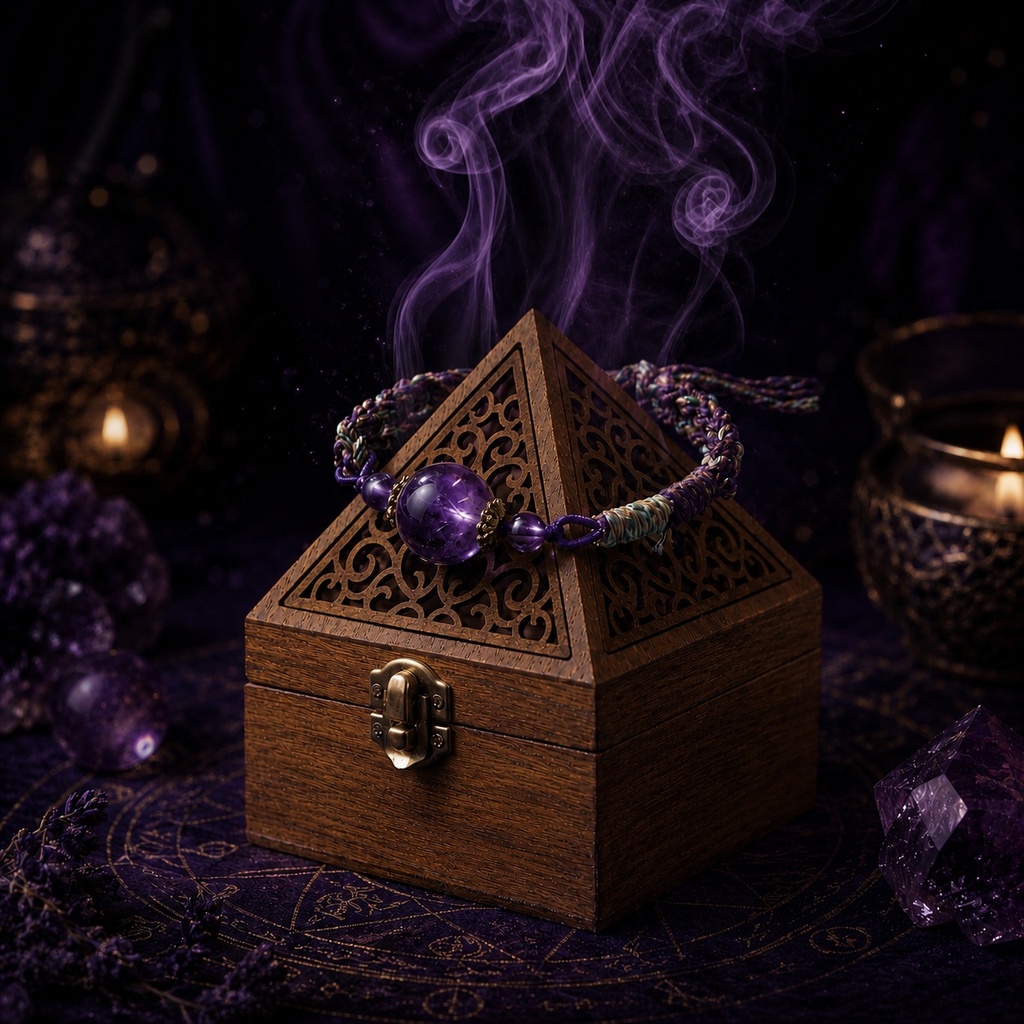
There’s a reason the same handful of stones keeps showing up — in your saved posts, your mother’s jewelry box, the little dish on your nightstand. Rose quartz, amethyst, clear quartz, lapis, citrine, and obsidian have been worn, traded, and gifted for centuries, not because they promise anything dramatic, but because people keep finding them quietly useful as reminders of how they want to feel.
That’s really what crystal meanings for modern symbolic jewelry are about. They aren’t instructions and they aren’t guarantees. They’re a shared vocabulary — a way to say I’m being gentle with myself this season or I’m ready to put something down without having to explain it out loud at brunch.
Here’s a grounded look at six of the most-loved stones: what each is traditionally associated with, how people actually wear them, and how to choose the one that fits your life right now.
What Crystal Meanings Can and Can’t Do
Most of what you’ll read about crystals swings between two extremes: flat skepticism or promises that a stone will rearrange your entire life. Neither is very helpful. A more honest middle ground is this — a crystal is a beautiful object carrying a story, and stories are remarkably good at nudging behavior.
So when we talk about crystal meanings for modern symbolic jewelry, we’re talking about symbolism, tradition, and personal association. A rose quartz bracelet won’t change your relationships. It can, however, catch your eye at 4 p.m. on a hard day and remind you to answer that text more kindly. That’s the whole mechanism, and honestly, it’s enough.
Two practical notes before we go stone by stone:
- Choose the stone whose meaning matches a feeling you’re genuinely working on, not the one that photographs best.
- Let the meaning become yours. If amethyst reminds you of your grandmother’s kitchen rather than “calm,” that association is stronger than anything a chart can hand you.
Shop the Sorvara ritual
Rose Quartz: Softness You Can Actually Put On
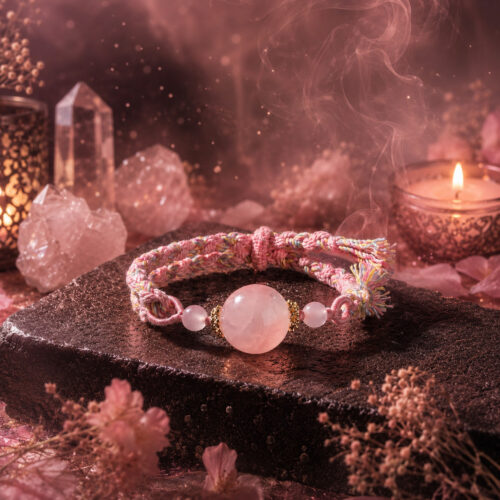
Rose quartz is the stone most people meet first, and for good reason. It’s traditionally associated with love in the broadest sense — romantic, yes, but also friendship, family, and the quieter work of being kind to yourself. Many people choose it during seasons when they’re recovering from something, starting over, or simply trying to be less harsh in their own head.
In jewelry, rose quartz reads as feminine without being precious about it. A handwoven piece like Rose Memory works with denim and a white tee as easily as it does with a dress, which is part of why it gets worn daily instead of saved for occasions. If you prefer your softness closer to the collarbone, the First Blush Choker keeps that blush tone subtle and skin-friendly, while The Soft Beginning layers a soft choker with a symbolic pendant for days when one piece doesn’t feel like enough.
A small ritual idea: the first time you wear a new rose quartz piece, decide out loud what kind of tone you want to set in your closest relationships. It sounds a little silly. It also sticks.
Amethyst: For the Quiet Evening Hours
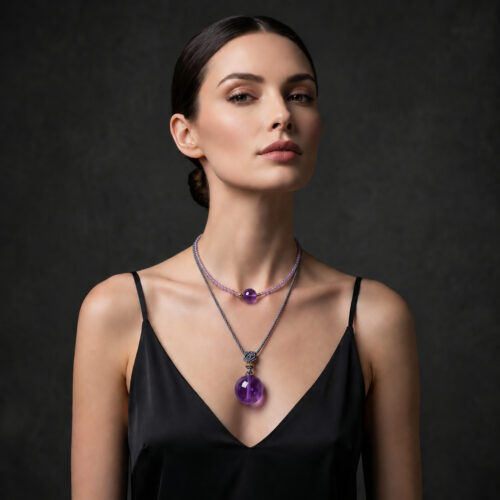
Amethyst has a long folk history tied to sobriety, clear thinking, and evening calm — traditionally associated with winding down rather than firing up. Modern wearers tend to choose it for the same reason: it’s a visual cue to stop scrolling, dim the overheads, and let the day end.
The violet family is where amethyst styling really shines. Violet Night Choker brings a deeper, more saturated tone that feels almost evening-wear, while Violet Hour keeps things softer and more everyday on the wrist. If you like a matched look, The Complete Violet pairs a choker and bracelet in the same violet story, and The Amethyst Layers is the choice for anyone who likes stacking two purple tones and letting them talk to each other.
How to wear amethyst without going full evening gown
- Pair it with warm neutrals — cream, oatmeal, camel — so the purple reads as intentional rather than costume.
- Keep the rest of your jewelry minimal and let one violet piece be the moment.
- Wear it to bed-adjacent moments: dinner at home, reading, the last hour before lights out.
Clear Quartz: The Clean Slate Stone
Clear quartz is often called the master stone in crystal traditions, which is a flowery way of saying it’s associated with clarity, focus, and clearing mental clutter. It’s also the most versatile stone in any jewelry box, because it goes with literally everything and doesn’t announce a mood the way color does.
That neutrality makes it a good first symbolic piece — or a good reset piece. The Bubble Cloud works as an everyday wrist companion, and the Bubble Cloud Necklace gives you the same idea in a lighter, closer-to-the-collarbone form. If you’re building a small capsule, the Bubble Cloud Set takes the guesswork out of matching.
People often choose clear quartz at the start of something — a new job, a move, a semester — and use it as a physical reminder of one specific intention. Try writing that intention down the day the piece arrives and keeping the note somewhere you’ll see it.
Lapis: Deep Blue and a Clearer Voice
Lapis lazuli has one of the longest decorative histories of any stone, ground into pigment for centuries before it was ever set into jewelry. It’s traditionally associated with wisdom, truth, and self-expression — the kind of confidence that comes from knowing what you actually think.
That makes it a natural pick for anyone in a season of speaking up: interviews, difficult conversations, creative work that requires you to put your real opinion on the page. Lapis Night leans into the stone’s deeper, almost midnight register, while the Still Blue Choker softens the same color story for daytime. For layering, The Tide Comes In Still Blue Choker + Shallow Sea Bracelet pairs ocean-toned blue pieces so the color carries from neckline to wrist.
Citrine and Obsidian: Warmth, and the Art of Letting Go
These two are opposites, which is exactly why they’re worth considering together.
Citrine is the sunny one — traditionally associated with optimism, energy, and a sense of everyday abundance, meaning the feeling that there’s enough to go around rather than any promise about money. It’s a lovely stone for mornings and for anyone who runs a little cold in the mood department during winter. Warm gold tones flatter it: the Golden Hour Choker and The Golden Hours both lean into that late-afternoon light feeling, and Slow Sunday is the softer, weekend version of the same idea.
Obsidian sits at the other end. It’s a volcanic glass, traditionally associated with protection and release — a stone people reach for when they’re closing a chapter rather than opening one. Return to Zero is built around exactly that idea, and The Blank Page pairs it with a symbolic pendant for anyone who wants the reset to be visible.
How to Choose Crystal Meanings for Modern Symbolic Jewelry
You don’t need to believe anything specific to wear a stone well. You just need a reason that’s yours. A few questions that help:
- What feeling am I short on right now? Calm, softness, focus, courage, warmth, or closure — pick the stone that maps to the gap.
- What will I actually wear? A pendant you love beats a bracelet you find fussy every single time.
- Does the color fit my wardrobe? Symbolism fades fast if a piece never leaves the box.
- Is this a gift? Then choose the meaning that fits the person you’re giving it to, not the one that fits you.
And if you’re drawn to more than one, that’s normal. Most people end up with two or three stones in rotation, each tied to a different part of their life.
Making It a Small Daily Ritual
The piece does more work when it’s attached to a moment. Some people put their jewelry on before their first coffee and name one intention for the day. Others take everything off at night, set it on a small tray, and use those thirty seconds to close out the day properly.
If you like a fuller ritual, scent is a gentle way to mark the shift. The Pyramid Pine Wood Incense Burner suits a quiet corner and a slow morning, while Still Fire fits an evening reset — one stick, lights low, jewelry off, day done.
None of this has to be elaborate. The point isn’t ceremony for its own sake; it’s giving yourself a repeatable minute where you’re not doing anything for anyone else.
If you’re ready to start, choose the stone that matches the season you’re actually in — not the one you wish you were in. Browse the rose quartz pieces for softness, the amethyst designs for evening calm, or the obsidian bracelets if you’re closing a door. Wear it often, let the meaning shift as you do, and keep the ritual small enough that you’ll actually keep it.