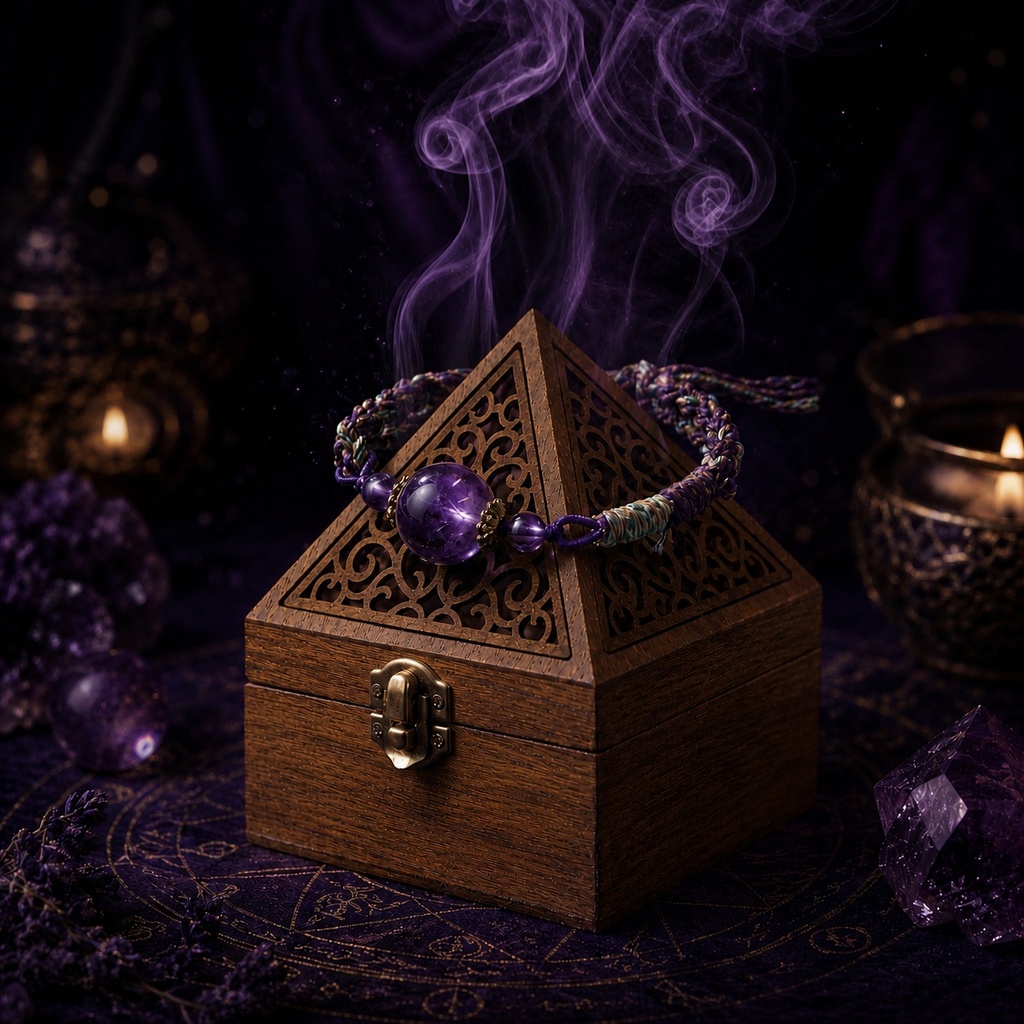
There’s a reason certain stones keep showing up in the jewelry women actually reach for every morning. A rose quartz bracelet that catches the light on your wrist. A violet choker that feels like the evening version of you. Crystal meanings for jewelry have been passed down for centuries — not as instructions, but as a shared language, a way of saying “I want to feel a little softer today” or “I need to start over” without saying it out loud.
It helps to be clear about what these meanings are. They aren’t medicine, and they aren’t promises. Rose quartz doesn’t fix a broken heart, and obsidian won’t erase a hard year. What stones offer is something quieter and more reliable: a symbol you can see and touch, a small physical anchor for an intention you’re already carrying. In that sense, the meaning of a crystal is less about the stone and more about the agreement you make with yourself when you put it on.
Below is a grounded look at six of the most-loved stones — rose quartz, amethyst, clear quartz, lapis, citrine, and obsidian — what each is traditionally associated with, and how to wear it in a way that feels like yours rather than like a rule someone else wrote.
Crystal Meanings for Jewelry: How to Read Them Without Turning Them Into Rules
Most stone symbolism grew out of color, geography, and old stories. Amethyst was linked to clear thinking because of its purple; lapis was ground into pigment for paintings of the divine; obsidian was formed by fire and cooled into something glass-smooth and dark. People noticed, remembered, and repeated. Over time, those associations became a vocabulary.
That vocabulary is useful because it gives you language for feelings that are hard to name. But it works best when you hold it loosely. A stone’s traditional meaning is a starting point, not a verdict. If rose quartz is described as gentle and you find it steadies you before a difficult conversation, that’s your meaning now. If amethyst is called calming and you simply love how it looks against a black dress, that’s valid too.
A simple way to approach it:
- Choose the color first. You’ll wear what you love, and you’ll wear it more often.
- Let the traditional meaning suggest an intention, then adjust it until it fits your actual life.
- Treat the piece as a reminder, not a requirement. It’s there to prompt you, not to grade you.
With that framing, the rest becomes much more enjoyable.
Shop the Sorvara ritual
Rose Quartz and Amethyst: Softness and Stillness
These two are the most common entry points into symbolic jewelry, and they balance each other beautifully — one is about warmth toward yourself and others, the other is about quiet.
Rose Quartz
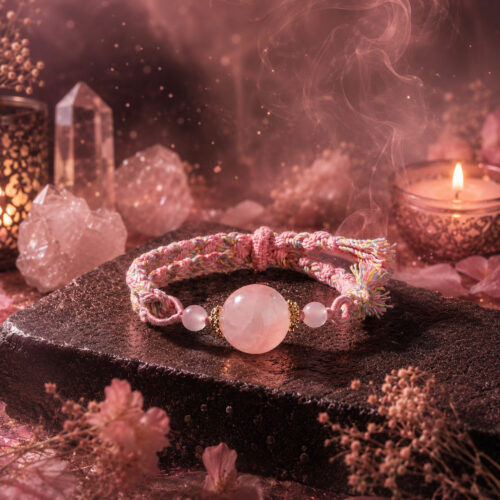
Rose quartz is traditionally associated with gentleness, affection, and self-compassion. It’s the stone people reach for after a season that asked too much of them, or when they want a visual reminder to speak to themselves the way they’d speak to a friend. Because the color is soft rather than bold, it layers easily — with denim, with cream, with the rest of a rose-toned stack.
If that’s the mood you’re after, the Rose Memory bracelet is handwoven in exactly that register, and the Rose Whisper leans even softer. Both are the kind of piece that works as a gift to yourself on an ordinary Tuesday, which is often when you need it most.
Amethyst
Amethyst is often chosen for evening calm, reflection, and the feeling of winding down. Historically tied to clarity and clear-headedness, it has become the stone of the last hour of the day — the one where you put your phone down, light something warm, and stop performing.
Violet tones layer gorgeously against navy, gray, and black. The Violet Night Choker is a clean, single-piece way to wear it, while the Violet Hour bracelet and The Amethyst Layers set give you more to work with if you like a stacked look.
Clear Quartz and Lapis: Clarity and Depth
Clear Quartz
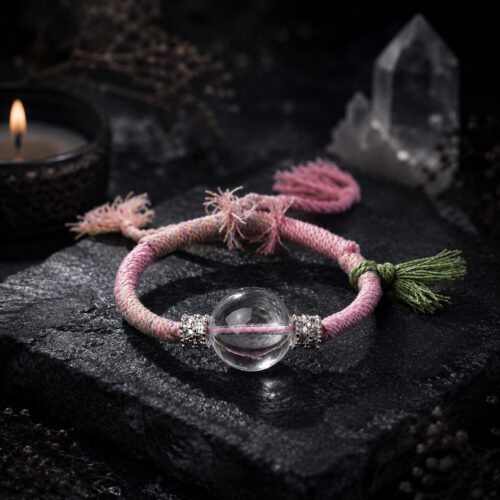
Clear quartz is often described as a blank slate — traditionally associated with clarity, focus, and the amplification of whatever intention you bring to it. That last part is worth saying carefully: it doesn’t generate outcomes, but as a symbol it’s remarkably good at holding a simple thought like “one thing at a time.”
It’s also the most versatile stone in a jewelry box because it goes with everything. The Bubble Cloud bracelet is a light everyday piece; the Bubble Cloud Necklace keeps the same idea closer to your heart; and the Bubble Cloud Set pairs them if you like a matched, layered look.
Lapis Lazuli
Lapis is deep, saturated blue with a history that stretches back thousands of years — used in jewelry, in ornament, and as pigment for some of the most enduring art ever made. It’s traditionally associated with truth, wisdom, and inner steadiness.
Because the color is so rich, lapis tends to do the styling work on its own. The Lapis Night piece is the most direct expression of that mood, and if you love ocean blues more broadly, the Still Blue Choker and Shallow Sea bracelet stay in the same cool, calm family.
Citrine and Obsidian: Warmth and Release
Citrine
Citrine is the sunshine stone — traditionally associated with warmth, optimism, and a lighter kind of confidence. It’s the one people choose when they want their jewelry to feel like morning rather than midnight.
If citrine’s golden mood is what draws you, warm-toned pieces carry that same feeling even when the stone is different. The Golden Hour Choker and The Golden Hours set both live in that sunlit register and pair well with cream, camel, and denim.
Obsidian
Obsidian is formed when lava cools quickly, and it’s traditionally associated with grounding, protection, and release. It’s less about softness and more about closing a chapter — the stone you wear when you’re done carrying something.
That’s the spirit behind the Return to Zero bracelet, a handwoven obsidian piece made for reset moments. If your reset is more about beginning than ending, The Blank Page set holds a similar intention in a softer palette.
Choosing a Stone That Actually Fits Your Life
Crystal meanings for jewelry only matter if the piece ends up on your wrist. You don’t need to match a stone to a problem — you need to match it to the version of yourself you’re trying to remember. A few practical filters:
- Start with the color you already wear most. A meaning you love but never put on isn’t doing much.
- Match the stone to a time of day. Clear quartz and citrine for mornings, amethyst and lapis for evenings, obsidian for transitions.
- Think about how much layering you genuinely enjoy. Some women want one piece they never take off; others want a stack that shifts with their mood.
- If it’s a gift, choose the meaning that fits the person’s season, not the one that sounds most impressive.
Sets are a smart shortcut here, since the pairing has already been considered for you. The Story in Three Parts and The Warm Return are both easy starting points, and Slow Sunday is a lovely option if your ritual is more weekend and less weekday.
A Simple Way to Make the Meaning Yours
Symbolic jewelry tends to work best when it’s attached to something small and repeatable. You don’t need a long ceremony. Three steps are enough.
First, hold the piece for a moment before you put it on and name one thing you want more of today — patience, focus, softness, space. Second, wear it and let it be a prompt rather than a task; when you notice it during the day, take one slow breath. Third, at the end of the day, take it off with a small acknowledgment of what went right, even if the day was mostly ordinary.
If you like a fuller ritual, a quiet incense moment makes a natural bookend. The Pyramid Pine Wood Incense Burner suits a small meditation corner, and the Still Fire ceramic burner is made for warm evening resets — the kind of pause that turns taking off your jewelry into an actual closing of the day.
Crystal meanings for jewelry are personal by design, so let yours mean what it means to you. Rose quartz, amethyst, clear quartz, lapis, citrine, and obsidian have carried stories for centuries, but the most useful story is the one you write on top of them. Browse the full Sorvara collection and find the piece you’ll reach for tomorrow morning.