
There is a particular kind of tired that comes from living in the middle of everything: the mail on the counter, the half-finished glass of water, the jewelry you took off beside the sink. Cleansing and reset rituals do not have to be dramatic or expensive. They can be small, repeatable actions that help you mark a transition—from work to evening, from noise to quiet, from autopilot to intention. A clean surface, a familiar scent, and a piece of crystal jewelry can become a gentle cue that says: this moment is different.
At Sorvara, we think of jewelry as more than an accessory. A handwoven bracelet or a simple pendant can be beautiful on its own, and it can also serve as a reminder of how you want to feel. The same is true of incense and the corner where you keep it. None of these things promise a specific outcome. They are symbolic tools for attention, and attention is often where a reset begins.
This guide is about cleansing and reset rituals you can actually keep: a small intentional space, a few minutes with incense, and a simple way to care for crystal jewelry. No complicated supplies, no pressure to do it perfectly, and no need to turn your home into a sanctuary showroom.
What Cleansing and Reset Rituals Actually Mean
In everyday language, cleansing usually means making something clean. In ritual language, it often means making something feel clear again. Those two ideas can live together. You wipe the table. You rinse the cup. You put away the clutter. Then you add one symbolic action—a breath, a scent, a stone you wear—to mark that the space has shifted.
That distinction matters. A ritual is not a medical treatment, and it is not a guarantee. It is a repeated cue. Many people find that a small ceremony at the end of the day can be calming because it is familiar, sensory, and contained. You know what happens next: you clear the surface, light incense, take off your jewelry, and let the day end.
A ritual is a repeated cue, not a performance
You do not need candles in every corner or a perfect shelf. You need one action you can repeat without resenting it. If five minutes feels like too much, make it two. If incense is not your thing, use a clean cloth and a deep breath. The point is not to perform calm. The point is to notice the moment when you arrive.
Shop the Sorvara ritual
-
Incense Burner
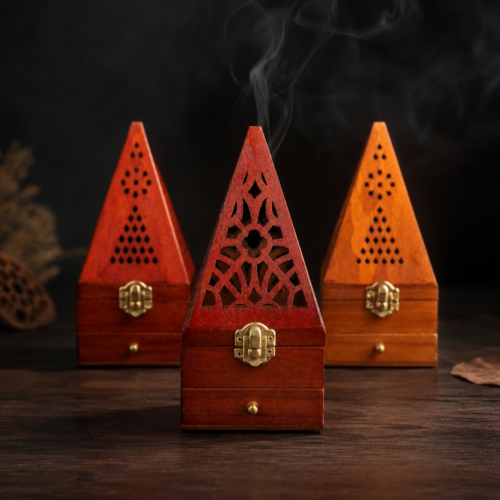
Pyramid Pine Wood Incense Burner, Vintage Hollow Aroma Holder Box, Decorative Desktop Zen Ornament
Price range: $45.00 through $49.00ClearHigh Triangle Red Pine Wood 1High Triangle Red Pine Wood 2High-triangular yellow pine woodShort-trunk red pine wood
Start With One Small Intentional Space
Choose a surface you already use: a nightstand, a dresser tray, a corner of a desk, or a shelf near the door. Clear it completely. Wipe it down. Put back only what earns its place—a small dish for jewelry, a book you are actually reading, and perhaps an incense burner. This is not about minimalism as a contest. It is about giving your eyes and hands a place to land.
A dedicated incense burner can make the ritual feel contained. The Pyramid Pine Wood Incense Burner has a quiet, architectural shape that works on a desktop or dresser without asking for much room. You place a stick or cone, you light it, and you have a visual anchor for the next few minutes. Keep it on a heat-safe surface, away from curtains and paper, and never leave burning incense unattended.
The three-object rule
If you are not sure what belongs in your intentional space, try limiting it to three objects: something to hold jewelry, something to scent the air, and something that reminds you why the space exists. A small ceramic dish, an incense burner, and a single stone or card can be enough. When the surface starts to collect clutter again, the three-object rule gives you a simple way to reset it.
How to Cleanse Crystal Jewelry Gently and Symbolically
When people talk about cleansing crystal jewelry, they often mean two different things. The first is physical care: removing oils, dust, and perfume residue so the piece stays beautiful. The second is symbolic: a small reset that helps you begin again with the piece. Both are worth doing, but they require different approaches.
For physical cleaning, follow the care guidance that comes with your jewelry. Many handwoven bracelets and strung pieces should not be soaked, and some stones are more sensitive to water, heat, or direct sunlight than others. A soft, dry cloth is usually the safest place to start. If you use a slightly damp cloth, wring it out well, wipe gently, and pat dry. Avoid harsh cleaners, ultrasonic machines, and anything that could loosen knots or damage a finish.
For a symbolic reset, keep it simple. Set the piece on a clean cloth. Take three slow breaths. Name one thing you are leaving behind and one thing you want to carry forward. Then put the jewelry back on, or place it in its dish until morning. You might say this is traditionally associated with clarity, or simply that it helps you pause. Either way, the meaning comes from your attention, not from a promise.
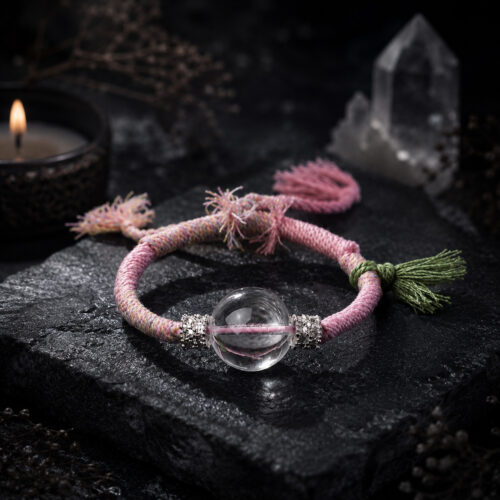
Some pieces naturally lend themselves to reset rituals. The Return to Zero handwoven obsidian bracelet is often chosen for its grounded, minimal look and its symbolic connection to starting over. It can serve as a reminder each time you fasten it: begin here, not from yesterday’s noise.
A two-minute jewelry reset
- Remove rings and bracelets before washing your hands, applying lotion, or cleaning.
- Wipe each piece with a soft dry cloth and let it air out before storing.
- Set the piece on a clean dish or cloth and take one deliberate breath.
- Choose one word for the evening—soft, clear, steady, done—and let the jewelry remind you of it.
Incense as a Sensory Cue for Reset Rituals
Incense is one of the oldest ways to change the feeling of a room. A match strikes, a thin line of smoke rises, and suddenly the air has a beginning and an end. You do not need to explain it. The scent does the work of signaling that this is a different part of the day.
Choose a scent you genuinely like, not one you think you should like. Light one stick or cone, let it burn for a few minutes, and then extinguish it safely if you are not staying in the room. Open a window or door for ventilation. Keep the burner stable and away from anything flammable. If you live with pets or sensitive lungs, skip the incense and use a clean cloth, a bowl of water, or a few drops of fragrance on a cotton pad instead.
For a warmer, more ceramic look, the Still Fire ceramic incense burner can sit on a tray with your jewelry dish. The ritual can be as short as this: light the incense, remove your jewelry, wipe the surface, and sit for one song. When the song ends, the reset is done. That is enough.
Build a Five-Minute Evening Reset
Evening is a natural time for cleansing and reset rituals because the day is already asking to be put down. Try this sequence, then adjust it until it feels like yours.
- Clear one surface. Put away mail, cups, and anything that does not belong. Wipe the surface with a dry or barely damp cloth.
- Light incense. Use a heat-safe burner and keep it within sight. Let the scent mark the transition.
- Remove your jewelry. Wipe each piece gently, check clasps and knots, and place it in a dish rather than on the sink.
- Take three breaths. Let the first breath be an arrival, the second a release, the third a choice about how you want to close the day.
- Say one sentence. It can be as plain as: I am done for today. Or: I am making room for tomorrow.
If you want to make the ritual more tactile, add a bracelet you associate with slowing down. The Slow Sunday bracelet is a warm, handwoven piece that pairs easily with an evening reset. You can wear it during the ritual and take it off with your other jewelry, or leave it on as a soft reminder that the pace has changed.
Keep the Ritual Fresh Without Making It Another Chore
The fastest way to ruin a ritual is to make it another standard you have to meet. If you miss a night, nothing is broken. If you skip the incense because you are tired, the reset can still be a wiped surface and a deep breath. The ritual works because it is repeatable, not because it is perfect.
Change one element when the ritual starts to feel stale. Move the incense burner to a different corner. Swap the dish. Wear a different bracelet. Cleanse your jewelry on the first day of the month instead of every night. You can also tie the ritual to a season: a clear quartz piece for bright winter light, a blue bracelet for slower evenings, a warm gold-toned set for late summer. These associations are personal and symbolic, not fixed rules.
It also helps to keep your supplies contained. A small tray or box can hold a cloth, a few incense sticks, and your jewelry dish. When everything has a home, the ritual takes less decision-making. You are not searching for matches or a clean cloth. You are simply returning to a place that is ready for you.
A Gentle Place to Begin
Cleansing and reset rituals do not need to be elaborate to be meaningful. A cleared surface, a scent you love, and a piece of jewelry you choose with intention can be enough to mark the end of one part of the day and the beginning of another. Start with one corner. Start with five minutes. Start with the piece you reach for most often.
If you would like a simple place to begin, pair the Pyramid Pine Wood Incense Burner with the Return to Zero bracelet and let them live together on a small tray. Light the incense, wipe the bracelet, and take one breath before you put it on. That small pause is the ritual. Everything else is optional.