Most of us don’t need a lecture on crystal meanings to notice that some jewelry just feels different. You reach for one bracelet on a Tuesday morning and a different one on a Saturday evening, and the choice has nothing to do with your outfit. It has to do with how you want the day to feel. That quiet instinct is where modern symbolic jewelry begins — not in rules or rigid belief systems, but in the small, personal language of color, texture, and intention.
Traditionally, crystal meanings have been passed down as stories rather than instructions. Rose quartz has long been associated with softness and affection. Amethyst is often chosen for calm and reflection. Clear quartz is traditionally linked with clarity and clean starts. Lapis lazuli carries a long history tied to voice and truth. Citrine is associated with warmth and quiet abundance. Obsidian has been used as a symbol of honesty and fresh beginnings. None of these are promises. They’re reminders — small, wearable notes to yourself about how you’d like to move through the world.
This guide walks through six of the most loved stones in crystal meanings for modern symbolic jewelry, with a practical eye on how to actually wear them. No fear, no guarantees, no complicated rules. Just color stories, symbolism, and a few ideas for building a ritual that fits a real life.
Why Crystal Meanings Still Matter in Modern Symbolic Jewelry
There’s a reason these old associations keep resurfacing in jewelry design. A stone gives you something to look at and something to remember. It’s a physical anchor for a feeling you’re trying to carry — patience, softness, courage, rest. That’s not a medical claim or a spiritual guarantee. It’s the ordinary psychology of a meaningful object, the same way a ring from a grandmother or a necklace from a friend can steady you on a hard morning.
What makes symbolic jewelry work is specificity. A vague intention like be better doesn’t stick. A small, concrete one does: speak up in the meeting, put the phone down at nine, be gentler with myself this week. When you pair that intention with a color and a texture you genuinely love, the piece stops being decoration and becomes part of your day.
- Color sets the emotional tone — cool blues for quiet, warm golds for comfort, soft pinks for tenderness.
- Texture matters more than people expect. Handwoven knots and matte finishes feel grounding; polished stones feel more formal and bright.
- Repetition is what turns a piece into a ritual. Wearing the same bracelet while you make your first coffee is a ritual. Buying it and forgetting it isn’t.
If you keep those three things in mind, crystal meanings become something you use rather than something you obey.
Shop the Sorvara ritual
Rose Quartz, Amethyst, and Clear Quartz: The Everyday Three
These are the stones most people meet first, and for good reason. They’re soft in color, easy to layer, and flexible enough to work with almost any wardrobe.
Rose Quartz: The Soft-Heart Stone
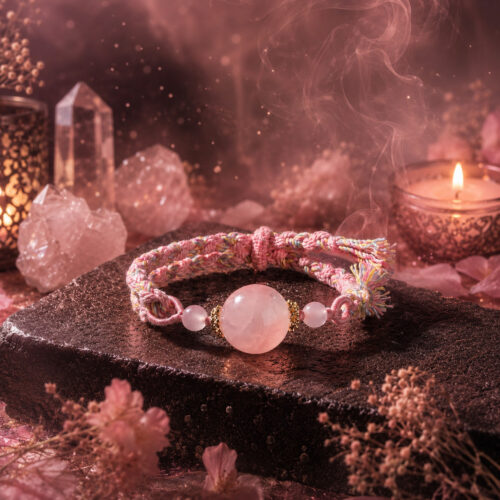
Rose quartz is traditionally associated with tenderness, affection, and self-compassion. It’s often chosen by people who are hard on themselves, or who are moving through a season that asks for gentleness rather than grit. In symbolic jewelry, a rose quartz piece can serve as a reminder to speak to yourself the way you’d speak to a friend.
Rose tones are also forgiving in styling. A handwoven piece like Rose Memory sits easily next to a plain white tee or a linen dress, and Rose Whisper leans a little softer and more romantic for evenings or self-gifting moments. Both work well as a first symbolic piece because the meaning is easy to hold in mind without effort.
Amethyst: The Quiet Evening Stone
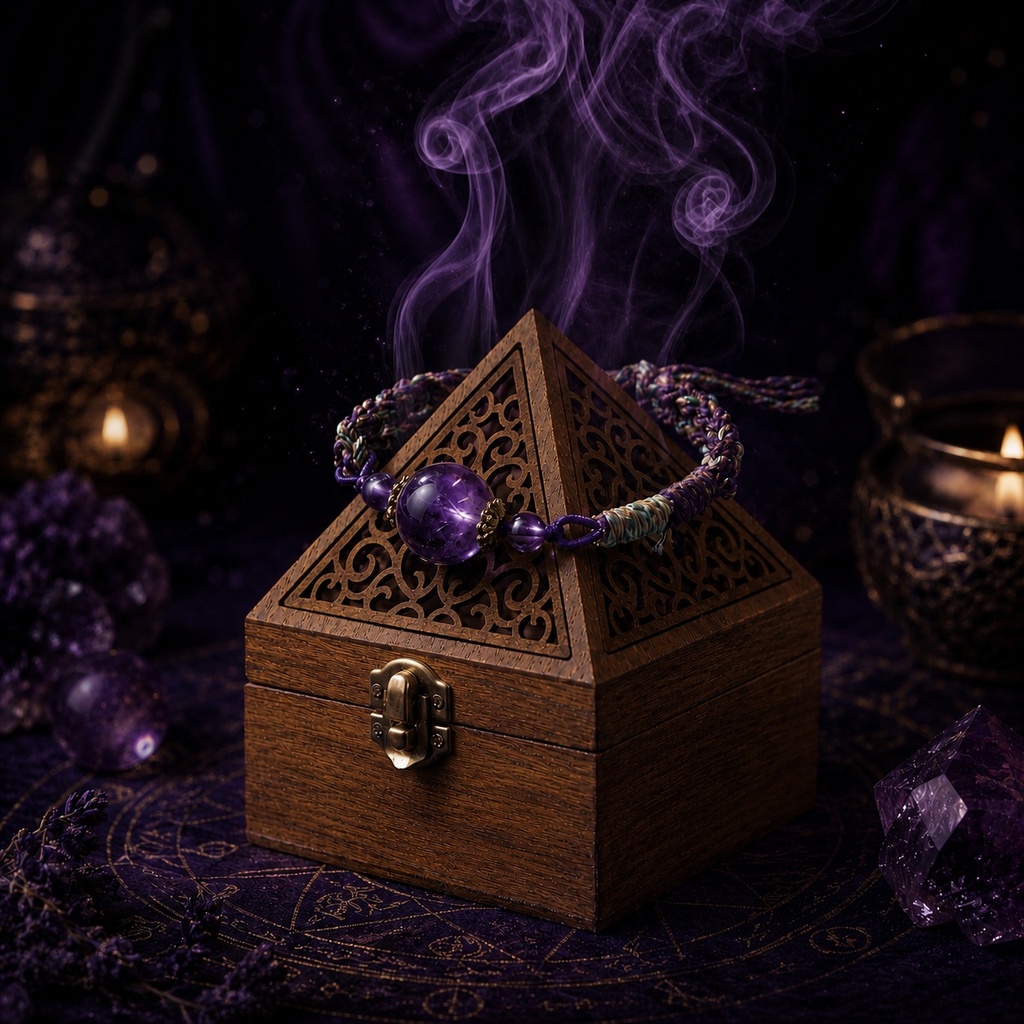
Amethyst is often chosen for calm, reflection, and the kind of stillness that helps you wind down. Historically it’s been linked to clarity of thought and moderation — the stone of the last hour of the day rather than the busiest one. That makes it a natural fit for a personal evening ritual: jewelry off the desk, lights lower, phone away.
Violet tones layer beautifully. Violet Hour works as a single quiet note, while Violet Night Choker and The Violet Hours build a fuller story when you want a set that feels cohesive without matching exactly.
Clear Quartz: The Clean-Slate Stone
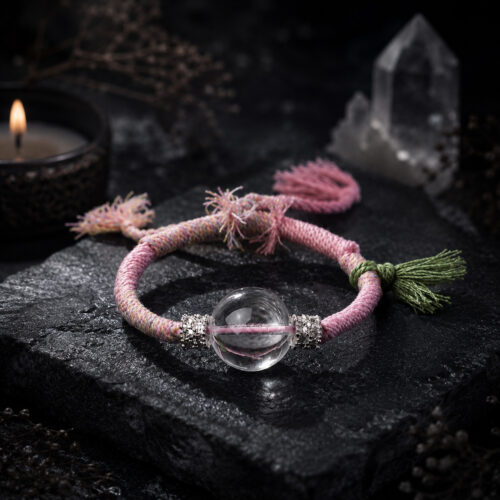
Clear quartz is traditionally associated with clarity and focus — less a magical reset button than a visual cue to clear the noise. It’s the most neutral of the stones, which makes it the easiest to wear daily and the easiest to combine with pieces you already own.
The Bubble Cloud is a good everyday entry point, and the Bubble Cloud Necklace gives you the same idea in a softer, closer-to-the-collarbone shape. If you like a coordinated look, the Bubble Cloud Set pairs the two without feeling overly styled.
Lapis, Citrine, and Obsidian: The Deeper Notes
The next three stones carry a little more weight. They suit people who already know what they want a piece to remind them of.
Lapis Lazuli: The Deep-Blue Stone of Voice
Lapis has one of the longest histories of any stone used in ornament, and it’s traditionally associated with truth, expression, and inner authority. In modern symbolic jewelry it’s often chosen by people who are practicing saying the thing out loud — in a new role, a new relationship, or a season of setting boundaries.
Deep blue is also simply flattering. Lapis Night reads as evening-ready without being formal, and it layers nicely with lighter ocean tones like Shallow Sea or Still Blue Choker if you like a cool-toned palette.
Citrine: The Sunlit Stone
Citrine is associated with warmth, optimism, and a gentle sense of plenty — not in a get-rich-quick way, but in the everyday sense of noticing what’s already good. It’s a nice choice for a piece you wear on gray mornings, when you want a small visual lift rather than a big life change.
Sorvara’s warmest pieces echo that same sunlit feeling. The Golden Hour Choker is the closest match in spirit, and The Golden Triptych builds a full warm-toned set if citrine’s golden mood is what you’re after.
Obsidian: The Honest Mirror
Obsidian has historically been used as a symbol of protection and honesty — the stone you reach for when you want to stop negotiating with yourself. In a modern symbolic sense, it’s less about warding anything off and more about seeing clearly and starting again without drama.
Return to Zero is built around exactly that idea: a handwoven black bracelet for reset moments. Wear it on the first day of a new month, after a hard week, or any time you want a quiet marker between one chapter and the next.
How to Choose Crystal Meanings That Fit Your Actual Life
The most common mistake with symbolic jewelry is choosing a stone because of what it’s supposed to mean instead of what you actually need. A piece you don’t love looking at will not become a ritual, no matter how beautiful its symbolism is on paper. Start with the piece, then attach the meaning.
A few practical questions help narrow it down:
- What season am I in? A season of overwork calls for something calming. A season of hiding calls for something that reminds you to be seen.
- What will I actually wear? If you live in bracelets, buy a bracelet. If necklaces feel fussy, don’t force it.
- Does it match three things I own? If the answer is no, it will sit in a drawer.
- Is the meaning kind? Choose reminders that feel encouraging, not punishing.
If you’re choosing a gift, this gets easier. Sets like The Story in Three Parts and The Soft Beginning were designed around symbolic layering, which means you can give the meaning along with the piece — a choker for softness, a pendant for perspective, a bracelet for starting over.
Styling Symbolic Jewelry Without Overthinking It
Symbolic jewelry looks best when it isn’t treated like a costume. The easiest approach is to pick one anchor piece with meaning and let everything else be quiet. A single violet bracelet with a plain sweater does more than three layered pieces competing for attention.
When you do want to layer, keep to a color family. Warm gold tones with warm gold tones, cool blues with cool blues, rose and violet together if you like a softer, more romantic palette. Pieces like Inner Cosmos are designed to sit slightly apart from the rest, which makes them useful as a focal point rather than another layer in the stack.
And don’t overlook the space around the jewelry. If your ritual happens at home — a few minutes before bed, a quiet Sunday morning — the objects nearby matter. A Still Fire ceramic burner on a bedside table, or the Pyramid Pine Wood Incense Burner in a reading corner, turns a small habit into something you look forward to. Light a stick, take off your jewelry, and let the day close.
A Gentle Place to Begin
You don’t have to pick a stone and commit to it forever. Most people start with one piece, wear it for a few weeks, and notice what it does to their attention. Sometimes the answer is nothing, and that’s fine — it just means the meaning didn’t match the moment. Sometimes it becomes the thing you reach for without thinking.
If you’re not sure where to start, begin with the stone whose color you’d want to see on your wrist every morning. Let the crystal meanings come second. A piece you love is already doing most of the work, and the symbolism simply gives it somewhere to land.
Browse the Sorvara collection when you’re ready, and choose slowly. The right symbolic piece usually doesn’t need convincing — it just feels like yours.