Necklace layering looks effortless in photographs and then a little chaotic in real life. You put on a choker, add a pendant, and suddenly the whole thing feels busy instead of soft. The good news is that the fix is rarely more jewelry — it’s a bit of structure. The most useful necklace layering ideas aren’t about chasing trends; they’re about proportion, color, and knowing which pieces you genuinely want to reach for every morning.
If your wardrobe leans toward soft minimalist outfits — plain knits, slip dresses, white tees, quiet neutrals — you already have an advantage. A calm base gives jewelry room to speak. A choker, a pendant cord, and a strand of crystal beads can read as one thoughtful gesture rather than three separate decisions.
Below are the layering ideas we come back to most, along with the practical details that make a stack feel intentional: length, spacing, color, and how to keep the whole thing comfortable enough to forget you’re wearing it.
Start With a Choker as Your Anchor Layer
A choker does the quiet structural work in a layered stack. Because it sits close to the collarbone, it frames the face and gives everything below it a starting point. Without that first layer, longer necklaces can float and feel untethered.
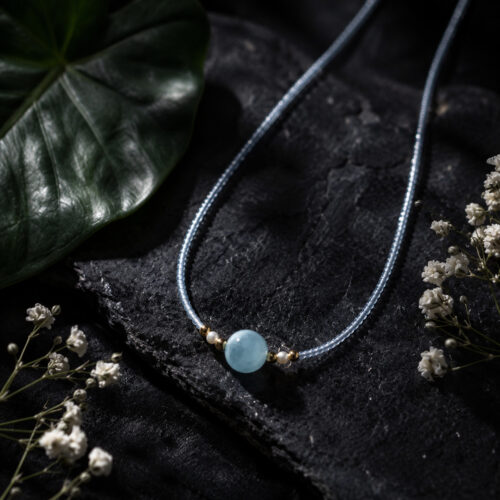
Choose your anchor by mood rather than by rule. A soft pink piece like the First Blush Choker keeps a pale outfit feeling warm and feminine, while the Still Blue Choker adds a cool, quiet note that works especially well with white, gray, and denim. If your everyday palette runs warm — cream, camel, soft gold — the Golden Hour Choker tends to feel like it belongs there. For evening, the Violet Night Choker brings depth without shouting.
The neckline rule that actually helps
Chokers and high necklines can compete. If you’re wearing a crewneck or a turtleneck, a choker often disappears into the fabric — which is fine, but it won’t do the framing job you want. Chokers tend to look most at home with open necklines: a V-neck, a scoop, a button-down left open two buttons, or a square neckline on a slip dress.
If you love high necklines, consider skipping the choker and starting instead with a short pendant. The layering logic stays the same; only the entry point changes.
Shop the Sorvara ritual
Add a Pendant Cord for Movement and Meaning
The second layer is where a stack starts to feel personal. A pendant cord introduces a vertical line, a little movement, and usually a small symbol you chose on purpose. It’s the layer people ask about.
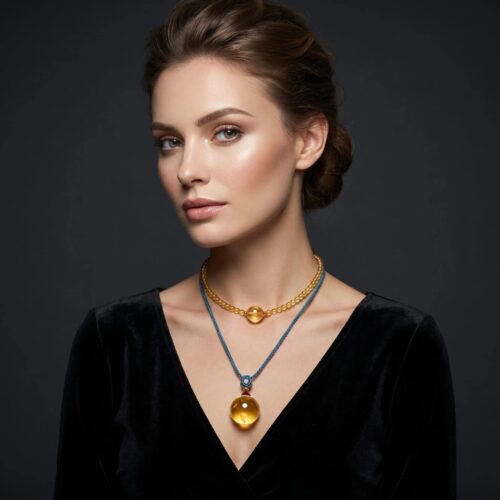
Length matters more than most people expect. Aim for a pendant that lands roughly one to two inches below your choker, so there’s visible space between the two pieces rather than a crowded overlap. A delicate cord like the Dream Cord sits lightly and reads as dreamy rather than heavy — lovely for evening or for days when you want something soft near the collarbone. The Inner Cosmos pendant has a more symbolic, inward-facing feel, and it layers beautifully over a plain knit when you want one meaningful piece to carry the whole look.
For something warmer and more everyday, the Slow Sunday Pendant is an easy second layer with a relaxed, weekend quality. It’s also one of those pieces that works just as well on its own, which matters if you’re building a stack you’ll actually maintain on busy mornings.
Crystal Beads Are the Quiet Third Layer
Beaded strands can be the trickiest layer to get right, mostly because people treat them as statement pieces. In a soft minimalist outfit, they work better as texture than as sparkle. A single strand of crystal beads, worn slightly longer than the pendant, adds a subtle glimmer and a bit of weight at the bottom of the stack.
The Bubble Cloud Necklace is a good example of a bead layer that stays quiet — clear quartz reads almost like light rather than color, so it layers over almost any palette without arguing. If you prefer a more saturated third layer, blue and violet tones tend to feel calm rather than loud.
Spacing, weight, and comfort
Three layers is usually the sweet spot. Four can work if one of them is very fine. A few small checks keep a stack from feeling heavy:
- Leave a visible gap between each layer, roughly the width of two fingers.
- Vary the visual weight — one delicate choker, one small pendant, one slightly heavier bead strand.
- Keep metals and tones in the same family so the eye reads one gesture, not three.
- Check the back of your neck before you leave; tangling usually starts at the clasp, not the front.
If your necklaces tangle constantly, layer them with slightly different chain or cord thicknesses. Identical cords tend to slide into each other.
Three Necklace Layering Ideas for Real Outfits
Layering advice gets abstract fast. Here’s how the same principles translate into outfits you probably already own.
The white tee and straight-leg jeans
This is the most forgiving base you can layer on. Try a blue choker, a small pendant, and a clear bead strand — cool tones against white always look considered. The The Tide Comes In Still Blue Choker + Shallow Sea Bracelet set does most of this thinking for you if you’d rather not build the stack piece by piece, and it gives you a matching wrist moment too.
The soft knit and slip skirt
Soft fabrics call for soft layers. A warm gold-toned choker with a pendant in the same family, plus a fine bead strand, keeps a cream-and-camel outfit from feeling flat. The The Golden Hours pairing is built around exactly this idea — warm tones that layer naturally together and feel calm rather than decorative.
The button-down, half-tucked
An open collar gives you a natural V to work with. A pendant sits perfectly in that space, and a choker frames it. If you want a softer, more feminine version of this look, the The Soft Beginning set layers a blush choker with a symbolic pendant for a gentle, tonal effect that still feels minimal.
For violet lovers, The Amethyst Layers and The Complete Violet both offer pre-considered purple layering, which is helpful if you find tonal stacking hard to eyeball on your own.
Small Details That Keep a Layered Stack Feeling Calm
A stack starts to feel busy when every layer is trying to be the focal point. The fix is editing, not adding.
Keep one piece as the loudest note and let the others support it. If your pendant is detailed, choose a plain choker. If your choker has texture, keep the pendant small. Match the finish — all warm, all cool, or deliberately mixed in a way that repeats somewhere else in your outfit, like a bracelet or your bag hardware.
Consider your hair, too. If you wear your hair down and long, a choker can get lost; a slightly longer pendant layer will do more visible work. If your hair is up, the choker becomes the hero and the lower layers can stay subtle.
And give yourself permission to wear one layer. Layering is a tool, not a requirement. Some days a single choker is the whole outfit, and that’s a complete look.
Let Your Layers Carry a Little Meaning
The reason a layered stack feels good isn’t only aesthetic. It’s the small daily ritual of putting on something in a particular order — the choker first, then the pendant, then the beads — and letting that moment be yours. Many people choose crystal jewelry for exactly that reason: not because a stone promises anything specific, but because it can serve as a quiet reminder of what they want to carry through the day.
If you like the idea of a set that already tells a story, The Story in Three Parts was designed around that kind of gentle symbolism, and it makes a thoughtful gift for someone starting something new.
Start with one anchor you love, add a pendant that means something to you, and let the third layer arrive when you’re ready. If you’d like a place to begin, the Still Blue Choker and The Golden Hours are two of our favorite foundations for soft, minimalist layering — quiet enough to wear every day, considered enough to feel like yourself.