
There is a specific kind of tiredness that has nothing to do with sleep — the kind that comes from a full inbox, a loud week, and a mind that keeps rehearsing tomorrow at 11 p.m. Simple cleansing and reset rituals won’t erase any of that. What they can do is give you a small, repeatable pause: a moment where you set down what you’ve been carrying and decide, gently, what you’d like to pick back up.
At Sorvara, we think of ritual as something closer to a habit than a ceremony. It doesn’t require candles you have to hunt for, an hour of silence, or a perfectly styled shelf. It can be three minutes at your dresser with a bracelet in your hands. It can be one stick of incense while you put your phone in another room. The point isn’t performance. The point is returning to yourself in a way that is small enough to actually keep.
What follows is a simple, flexible approach to cleansing and reset rituals using crystal jewelry, incense, and one small intentional space. Take what feels good, leave the rest, and let it be softer than you think it needs to be.
What Cleansing and Reset Rituals Actually Mean in Daily Life
Cleansing, in this context, isn’t about scrubbing anything spotless. It’s the deliberate act of setting down what the day left on you — the tight shoulders, the half-finished conversations, the low hum of overstimulation. Reset is the second half of the practice: choosing, on purpose, the mood you want to carry into the next few hours.
Many people find that a physical action makes that shift easier to feel. Washing your hands slowly. Wiping down one small surface. Passing a bracelet through a thin ribbon of incense smoke. These gestures are symbolic, but symbolism isn’t flimsy — it gives a tired mind something concrete to hold when abstract effort isn’t available.
Certain crystals are traditionally associated with clarity, calm, or new beginnings. We don’t present that as fact or as medicine, and we would never suggest a stone can do the work of a doctor, a therapist, or a genuinely good night of sleep. What we do believe is that a piece you chose with intention can serve as a reminder — a small, wearable cue that says: this is the version of me I’m practicing today.
A reset ritual can be almost any length. The size isn’t the point.
- Sixty seconds: take off your jewelry, hold it in both hands, and breathe out longer than you breathe in.
- Three minutes: light one incense stick and clear a single surface while it burns.
- Fifteen minutes: tidy your small space, wipe down your tray, and choose the pieces you want to wear tomorrow.
Shop the Sorvara ritual
-
Incense Burner
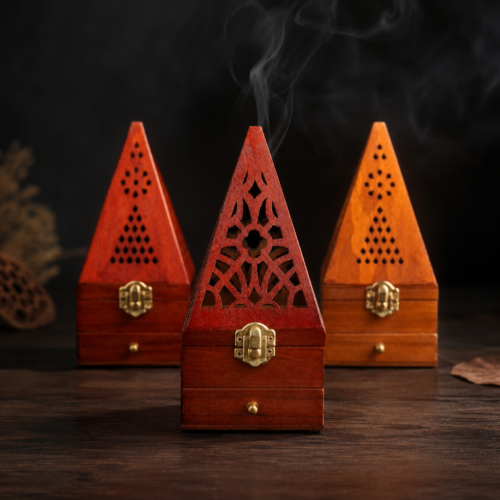
Pyramid Pine Wood Incense Burner, Vintage Hollow Aroma Holder Box, Decorative Desktop Zen Ornament
Price range: $45.00 through $49.00ClearHigh Triangle Red Pine Wood 1High Triangle Red Pine Wood 2High-triangular yellow pine woodShort-trunk red pine wood
Begin With One Small Intentional Space
You don’t need a whole room. A corner of a nightstand, the top of a dresser, or a tray on a windowsill is plenty. The trick is to let that space hold only things you actually like, so that looking at it feels like a small exhale rather than another chore.
Keep it to a handful of objects. A crowded altar becomes clutter, and clutter has a way of making us feel behind. Three to five items is usually the sweet spot — enough to feel intentional, few enough to feel calm.
What to place there
- One incense burner, ideally something you enjoy looking at even when it’s empty.
- One soft light source: a candle, a small lamp, or a warm bulb on a dimmer.
- One small dish or bowl for the jewelry you take off at the end of the day.
- One object that means something to you — a stone, a note, a photograph, a shell.
Where you burn incense often sets the tone for the whole corner. The Pyramid Pine Wood Incense Burner was made with exactly this kind of moment in mind — a hollow, vintage-style box that holds a stick, catches the ash, and lets a thin line of smoke drift up from a quiet shape on your desk or shelf. If you prefer ceramic and a slightly warmer, more grounded look, Still Fire works beautifully for evening resets, when the light is low and you want the room to feel held rather than decorated.
Your small space doesn’t need to impress anyone. It only needs to be somewhere your eyes can land and your shoulders can drop.
Using Crystal Jewelry as a Cue for Cleansing and Reset
Jewelry is interesting because you wear it. It travels with you into meetings, onto trains, through the grocery store and the school pickup line. That makes it one of the easiest anchors for a reset ritual, because the reminder is already on your wrist or at your collarbone.
The simplest version: choose one piece that becomes your reset piece. When you notice it — when it catches the light, when you touch it while thinking — you take one slow breath and ask yourself a single question. What am I carrying that I don’t need to carry into the next hour? That’s the whole ritual. No incense required.
A gentle way to cleanse your jewelry
Cleansing your pieces can be as simple as it sounds. There’s no single correct method, and none of these are required for the jewelry to “work” — they’re just ways of marking a transition.
- Wipe the piece with a soft, dry cloth while you think about what you’re setting down.
- Pass it briefly through incense smoke, then set it on its dish.
- Leave it overnight on a windowsill in moonlight, if that appeals to you.
- Simply hold it in both hands for a few breaths before you put it back on.
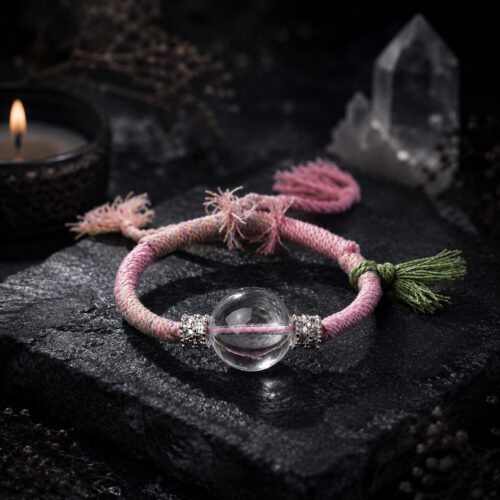
If you’re drawn to a piece specifically for resetting, obsidian is often chosen for its grounded, protective symbolism. The Return to Zero handwoven obsidian bracelet is a quiet, everyday version of that idea — dark, tactile, and easy to wear with almost anything. If clarity is more what you’re after, clear quartz is traditionally associated with focus and fresh starts, and the Bubble Cloud bracelet keeps that symbolism light and wearable rather than heavy.
Incense as a Room Reset, Not a Performance
Incense changes a room in about ninety seconds, which is part of why it fits so naturally into a reset practice. It gives your nose a clear signal that something has shifted — that the workday is over, that the argument is behind you, that the evening has begun.
You don’t need a full ritual setup to use it well. One stick, one burner, one open window. That’s it.
A three-minute evening reset sequence
- Open a window or door for a moment so the air can move.
- Light one stick and set it in your burner. Let it catch properly before you walk away.
- While it burns, put away three things. Not everything — three. A mug, a sweater, a stack of mail.
- When the stick is finished, say one sentence out loud. Something like the day is done, or I’m allowed to slow down now.
The sentence matters more than you’d expect. Naming the end of something is how the nervous system learns that it’s allowed to stop bracing. And if saying it out loud feels awkward at first, that’s normal. Awkward and effective can live in the same three minutes.
A Weekly Reset That Takes Fifteen Minutes
Daily rituals keep you steady. A weekly one keeps your space from quietly becoming a mess you avoid. Fifteen minutes is enough if you keep it narrow.
Wipe down the tray or surface where your items live. Empty the ash from your burner and set out a fresh stick or two for the week. Take off the jewelry you wore most and give it a slow wipe. Then choose what you want to wear over the next several days — not because you have to plan, but because choosing in advance is a small act of care for your future self.
This is also a lovely moment for layering. If you like the idea of building a set that already feels intentional, something like The Golden Triptych gives you a warm, gold-toned trio that works for both quiet days and dressed-up ones. If your reset is more about softness and symbolism, The Story in Three Parts pairs a blush choker, a symbolic pendant, and a grounding bracelet — a set that feels like a beginning rather than a performance.
Make the space easy to return to
Keep your supplies visible but contained. A small tray, a shallow bowl, a single drawer if you prefer things put away. If your incense is buried in a cabinet behind the batteries and the takeout menus, you won’t reach for it. Accessibility is the unglamorous secret behind every ritual that lasts longer than a week.
Making It Stick Without Making It Another Chore
The rituals that survive are the ones that attach themselves to something you already do. Brushing your teeth, making coffee, taking off your bra, getting into bed. Pick one existing moment and add sixty seconds to it. That’s how a practice becomes invisible in the best way.
It also helps to lower the bar on purpose. A single breath with your hand on a pendant counts. One stick of incense while you wash your face counts. You are not building a discipline. You’re building a doorway you can walk through when the day has been loud.
And if you skip a week? Nothing breaks. Ritual isn’t a streak you’re trying to protect — it’s a place you can come back to without apology. The whole point of a reset is that it’s always available again.
A Gentle Place to Begin
If you’d like to start somewhere small, start with one object and one minute. Set a burner on a surface you pass every evening, light a single stick, and let that be enough for now. You can add the jewelry, the dish, the folded note, the soft lamp later — or never.
Ritual works best when it feels like yours, not like something you copied from a screen. Choose the piece you keep touching. Choose the scent that makes your shoulders drop. Choose the corner of the room that already feels a little quieter than the rest.
Then come back to it tomorrow. Not perfectly. Just again.