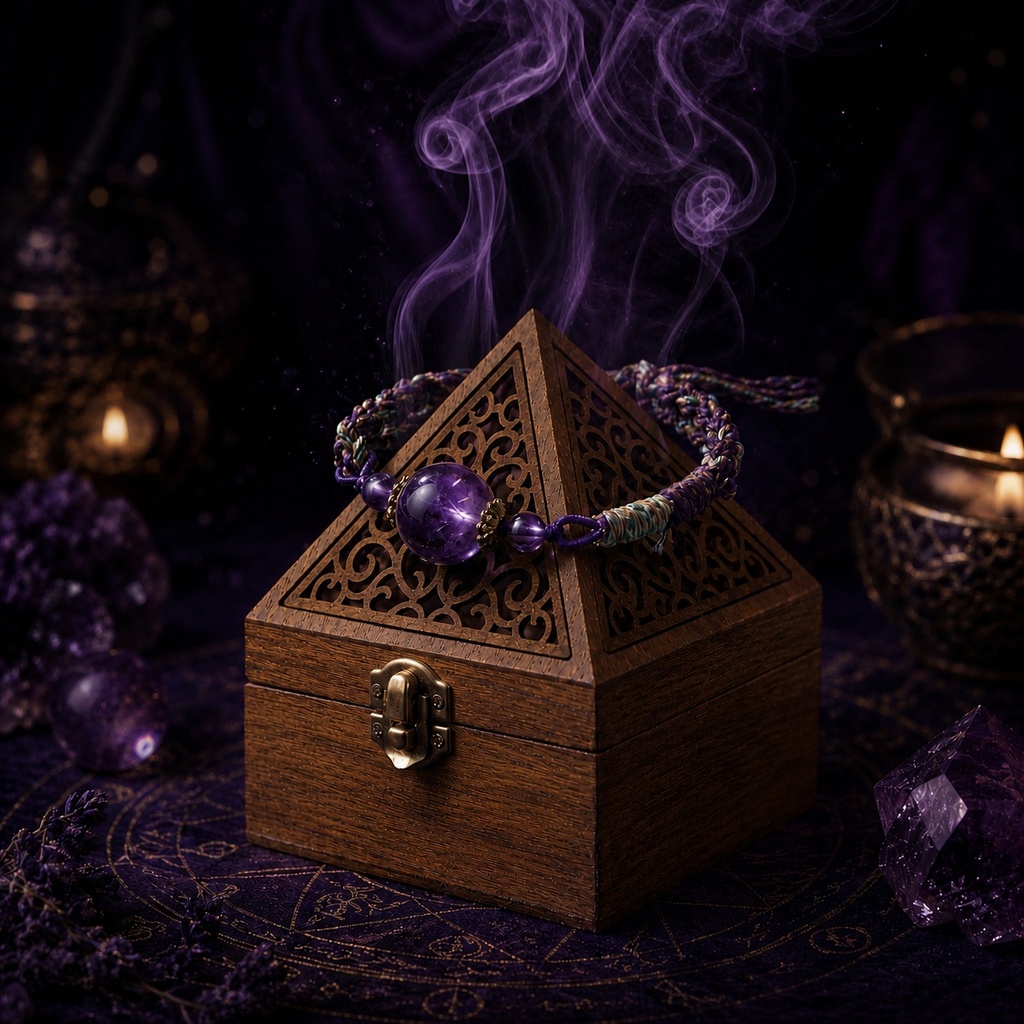
There’s a quiet moment that happens the first time you pick up a piece of handcrafted jewelry. You notice the weight of it. You run your thumb along a braided cord and feel the small, even tension of knots tied by hand. You hold a stone up to the light and realize the pattern inside it is one you have never seen before, and never will again. Nothing about it was stamped, printed, or replicated.
That is the difference many women are looking for when they move away from mass-produced accessories and toward small-batch, handmade pieces. It is not really about trend or price point. It is about the sense that what you are wearing had a maker, a mood, and a moment behind it — and that wearing it can feel less like decoration and more like a small daily ritual.
If you have ever wondered why handcrafted jewelry tends to feel more personal than something that came off an assembly line, the answer lives in the details: the cord, the stone, the scale of production, and the story you choose to attach to it.
What Handcrafted Jewelry Actually Means, in Practical Terms
The word handcrafted gets stretched. In a useful sense, it describes jewelry where a person, not a machine, handled the parts that matter: choosing the stones, cutting and knotting the cord, setting the clasp, finishing the ends. You can usually feel the difference within seconds. A handmade bracelet often has a slightly irregular tension in the weaving, a knot that sits a little differently from its neighbor, a stone set by eye rather than by mold.
Assembled by hand versus made by hand
There is a meaningful gap between assembled by hand and made by hand. Assembled means someone attached a pre-made charm to a pre-made chain. Made means the piece existed only as an idea until a person sat down and built it. Both can be lovely, but only one carries the texture of a decision made in the moment — where to place this stone, how tightly to pull that cord, when to stop.
Why small batches change the details
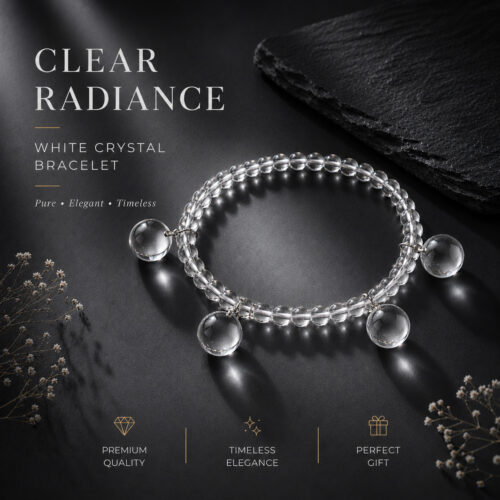
Small-batch production is slow by design. A maker working in batches of ten or twenty can notice things a factory line cannot: a stone with an internal line that will catch the light beautifully, a cord color that reads warmer in person than in photos, a clasp that feels heavier than it needs to be. Those adjustments are small, and they are exactly what makes a piece feel considered. If you want to see that idea up close, the Bubble Cloud clear quartz bracelet is a good example — the kind of piece where the clarity of the stone is the whole point, and where a hand-set stone reads differently than a machine-polished bead.
Shop the Sorvara ritual
Braided Cords and Knotted Threads Carry the Mark of a Hand
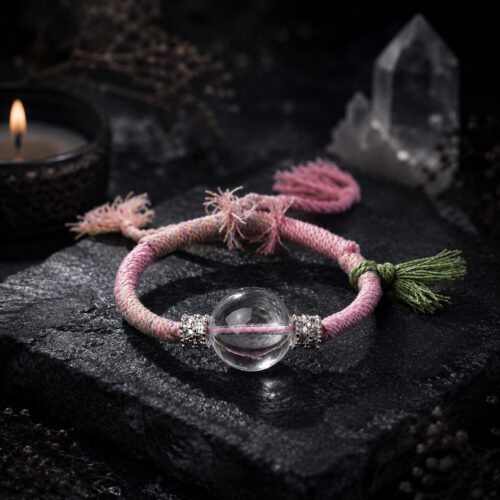
Metal is cast. Cord is tied. That is why braided and knotted jewelry tends to feel more human. A machine can produce a perfect, uniform braid. A person produces a braid with rhythm — the tension rising and settling as they work down the strand, the knot spacing shifting by a millimeter here and there. Those shifts are not mistakes. They are the visible trace of someone’s hands moving through time.
There is a tactile reason, too. Woven pieces sit softly against the wrist. They warm to your skin. They do not clink against a keyboard or catch on a sweater sleeve. For women who wear jewelry all day — while typing, cooking, driving, or sleeping on a long flight — a handwoven bracelet is often the piece they forget they are wearing, in the best possible way.
The Return to Zero handwoven obsidian bracelet leans into that softness, with a deep, grounding palette that reads as calm rather than heavy. If you prefer something warmer, Rose Memory pairs rose-toned stones with the same handwoven feel, and Violet Heart brings a knotted, heart-centered detail to the same idea.
Natural Stone Variation Is the Point, Not a Flaw
Every natural stone is a record of where it formed — pressure, temperature, minerals, time. That is why no two are identical, and why a strand of natural beads will always be slightly uneven in the most interesting way. When you order a piece made with natural stone, expect differences like these:
- Color depth that shifts between daylight and lamplight
- Fine internal lines, wisps, or soft clouds that no other stone shares
- Slight size or shape differences between beads in the same strand
- Surface texture that ranges from glassy to gently matte
None of these are defects. They are the signature of a material that grew rather than being manufactured. Many women find that the piece they end up loving most is the one that looked slightly imperfect in a photo and then felt completely right on their wrist. It also means the bracelet you receive is genuinely yours in a way a uniform product can never be. The Aurora Wild bracelet is built around stones with visible character — the kind of piece where variation is the design, not a side effect.
Why Small-Batch Pieces Feel Like They Were Made for You
Scarcity does something interesting to how we relate to objects. Not manufactured scarcity, but the real kind, where only a handful of pieces exist because only a handful could be made in a week. When you wear something from a small batch, you are participating in a chain of small decisions made by a person who cared about the outcome. It is similar to the reason a handwritten note lands differently than a printed card. Same words, different weight.
That quality makes handcrafted pieces natural gifts. A layered set like The Story in Three Parts or a soft pairing like The Soft Beginning tends to land better than a generic accessory, because it arrives already carrying meaning — and it is easy to attach your own.
Building a Small Ritual Around a Piece You Love
Jewelry does not need to be ceremonial to matter. The most sustainable way to make a piece feel personal is to give it a small, repeatable moment in your day. Traditionally, many people treat these moments as symbolic rather than therapeutic — a pause, a reminder, a way to mark the start or the end of something.
Morning: the piece you put on first
Choose one piece as your first-on, usually a bracelet or a simple necklace you reach for before anything else. Putting it on becomes a two-second check-in: today is starting, and here is what I want to carry into it. A clear quartz piece like the Bubble Cloud Necklace works well here, or a soft pink layer like the First Blush Choker if you want warmth to set the tone for the day.
Evening: the piece you take off last
Evenings benefit from the opposite gesture. Many women like to pair a slow, quiet moment with an incense ritual — lighting a stick, letting the room settle, and removing the day’s jewelry with intention. The Pyramid Pine Wood Incense Burner or the ceramic Still Fire burner can hold that moment. A Dream Cord pendant is a gentle choice to wear into it.
How to Tell a Handcrafted Piece From a Mass-Made One
A few practical things to look for when you are shopping, whether online or in person:
- Look at the ends and closures. Hand-finished ends are usually neat but not identical. Machine-crimped ends are perfectly uniform and often sharp.
- Check the knots. In a handwoven bracelet, knot spacing varies slightly. That is normal and a good sign.
- Read the stone description. Makers who work with natural stone usually mention variation. If a listing promises every piece is identical, the material probably is not natural.
- Notice the photography. Small-batch brands often show more than one example of the same design, because they know the piece you receive will differ slightly.
None of this requires expertise. Your hands usually know before your eyes do.
Choosing a Piece You Will Actually Wear
Start with one piece in a palette you already wear. Layering works best when the base color echoes your wardrobe rather than fighting it. For cool, blue-leaning tones, Shallow Sea or the Still Blue Choker slip easily into denim and gray. For warm neutrals, Slow Sunday or the Golden Hour Choker bring a soft glow to cream, camel, and olive. If you love deeper tones, Violet Night Choker or Lapis Night add richness without shouting.
If you are buying as a gift, the safest handcrafted gift is one well-chosen piece rather than a set you hope she will layer. A Slow Sunday Pendant or the symbolic Inner Cosmos pendant is easy to wear with anything and quietly meaningful, which is often exactly what someone wants from a piece they will keep for years.
The reason handcrafted jewelry feels more personal is not mysterious. It is made of small things: a knot tied by hand, a stone that grew its own pattern, a batch small enough that someone had time to look closely at what they were making. If you have been wanting a piece that feels like yours rather than everyone’s, start with one you will wear often — a clear quartz bracelet like Bubble Cloud, or a layered set like the Bubble Cloud Set if you like the idea of matching pieces — and let the ritual build itself from there.