There is a word in Japanese — natsukashii — that describes the particular feeling of longing and sweetness you experience when something brings back a memory from the past. It’s not quite nostalgia. It’s warmer than that. More physical.
You probably know the feeling, even if you don’t have a word for it.
And you’ve almost certainly experienced it through smell.
A particular combination of rain and old wood. The specific soap your grandmother used. The smell of a city you used to live in, arriving on a stranger’s coat on the subway. Something in a restaurant that suddenly places you, with complete physical certainty, in a kitchen that no longer exists.
This is the secret language of scent. And once you understand how it works — really understand it — you’ll never think about fragrance the same way again.
Why Smell Is Different From Every Other Sense
Every sense you have — sight, sound, taste, touch — passes through the thalamus, the brain’s relay station, before reaching the areas that process emotion and memory. There’s a small delay. A moment of translation.
Smell doesn’t do this.
The olfactory nerve connects directly to the amygdala (the brain’s emotional processing center) and the hippocampus (the primary seat of memory formation). No relay. No translation. Direct line.
This is why smells produce emotional and memory responses that feel almost involuntary — they arrive in the emotional brain before the rational brain has had a chance to interpret them. By the time you’ve consciously registered “that smells like sandalwood,” your nervous system has already begun responding. Heart rate has already shifted slightly. Cortisol levels have already begun adjusting.
You are not imagining this. This is anatomy.
And it means that the fragrances in your environment are not neutral. They are active. They are shaping your emotional and physiological state — whether you are paying attention to them or not.
Most of us are not paying attention to them. We are missing most of the language.
The Emotional Vocabulary of Fragrance
Different fragrance families produce reliably different emotional and physiological responses across populations. This doesn’t mean you will always feel these things — personal memory and association override general tendencies — but these are the baseline effects that researchers have documented most consistently.
Woody and Earthy — Grounding, Safety, Presence
Sandalwood. Cedarwood. Vetiver. Patchouli. Oakmoss.
These are the smells of the forest floor, of old wood, of soil after rain. They activate the same neural associations as physical contact with the earth — and humans who smell them consistently report feeling more grounded, more present, and less anxious.
Sandalwood in particular has been shown to slow respiration rate and reduce skin conductance (a measure of anxiety) within minutes of exposure. It is also one of the most universally used ritual fragrances in the world — from Hindu puja to Buddhist temples to Indigenous ceremony. Cultures that had no contact with each other arrived independently at the same conclusion: this smell makes people feel safe.
What it does to a room: Makes it feel inhabited. Settled. Like a place where serious and good things happen.
When to use it: Before a meditation or creative session. At the end of a difficult day when you need to land. Any time you need to come back to yourself from wherever the day has scattered you.
Floral — Openness, Tenderness, Connection
Lavender. Rose. Jasmine. Ylang-ylang. Neroli.
Floral fragrances are associated with vulnerability — in the best possible sense. They create a mild softening of the defensive posture that most of us carry through our days. Not weakness — opening.
Lavender is the most studied fragrance in the world at this point. The findings are remarkably consistent: lavender reduces cortisol, reduces heart rate, reduces subjective anxiety, and improves sleep quality. It’s used in hospitals, in dental offices, in labor and delivery wards, because the evidence for its calming effect is robust enough to take seriously.
Jasmine operates differently — it’s more activating than lavender, associated with mild mood elevation and increased alertness. It’s one of the few floral fragrances that feels expansive rather than settling — like a door opening rather than a room becoming quieter.
What it does to a room: Softens it. Makes it feel like a place where you don’t have to be entirely defended.
When to use it: Before a difficult conversation. During self-care rituals. When you want to create an atmosphere of warmth and tenderness — for yourself or for someone else.
Herbal and Green — Clearing, Freshness, Beginning
White sage. Eucalyptus. Rosemary. Peppermint. Thyme.
These are the smells of clearing — of the moment after a window is opened, of a space that has been cleaned and reset. They activate associations of freshness and beginning, and they tend to produce a mild increase in mental clarity and alertness.
White sage has been used for energetic cleansing for thousands of years across numerous traditions, and the bactericidal research we mentioned in our previous post lends some material support to the intuition that it genuinely clears a space. But beyond the chemistry, sage smells like a beginning. It smells like the decision to let something go.
This is the fragrance to reach for at transitional moments: new year, new month, new chapter. The end of something. The start of something. The day you finally let yourself move on.
What it does to a room: Resets it. Makes it feel like the previous version of events has been cleared from the air.
When to use it: After a difficult period. Before setting a new intention. Any time a space feels heavy and you want to change its character.
Resinous — Sacredness, Depth, The Feeling of Something Larger
Frankincense. Myrrh. Copal. Dragon’s blood. Benzoin.
These are the smells of sacred spaces across the world — the scents that every major religious and spiritual tradition has reached for when it wanted to signal: this is a different kind of space. Something significant is happening here.
Frankincense in particular seems to create a distinct neurological state — the incensole acetate research we mentioned earlier suggests it activates pathways associated with introspection and reduced fear response. It smells old. It smells large. It smells like whatever you believe in when you’re being quiet and honest about it.
Burning frankincense doesn’t require a theological position. It just seems to reliably create the conditions in which something quieter and more essential in you becomes more accessible.
What it does to a room: Elevates it. Makes the ordinary feel considered. Makes a regular Tuesday feel like it might contain something significant.
When to use it: Meditation. Deep creative work. Times when you need access to your own depth and the usual distractions are in the way.
Creating a Fragrant Home — The Intentional Approach
Most people think about home fragrance as decoration — something nice in the background. We’d like to suggest a different approach: home fragrance as environmental design. As intentional architecture for your psychological state.
Your home is the environment in which you recover, create, connect, and rest. The smells in it are not neutral furniture. They are active participants in how you feel in that space. You can leave this to chance, or you can build it deliberately.
Here’s how.
Map your rooms by function, then assign a fragrance.
Your bedroom is for rest and intimacy. Lavender, chamomile, sandalwood — the calming, softening notes. Your office or creative space is for focus and depth. Frankincense, cedarwood, rosemary — the clarifying, grounding notes. Your living room is for connection and ease. Warm woods, jasmine, amber — the opening, welcoming notes. Your ritual space, wherever it is in your home, is for whatever practice you bring to it. Use whatever fragrance you have decided means something there.
Build consistency before variety.
The power of scent in a space comes from repetition. The first time you burn sandalwood before creative work, it’s just a nice smell. The tenth time, your brain has begun to associate it with the state of focus you consistently enter there. The twentieth time, the smell alone begins to produce the state before you’ve done anything else. This is how you build a scent anchor — the same way you build any ritual: by showing up again and again until the pattern becomes self-reinforcing.
The vessel is part of the message.
There is a reason ceremonial incense is never burned in a disposable tin. The container signals intention. A beautiful vessel, chosen deliberately, tells both you and your nervous system that what is happening here is worth a beautiful vessel.
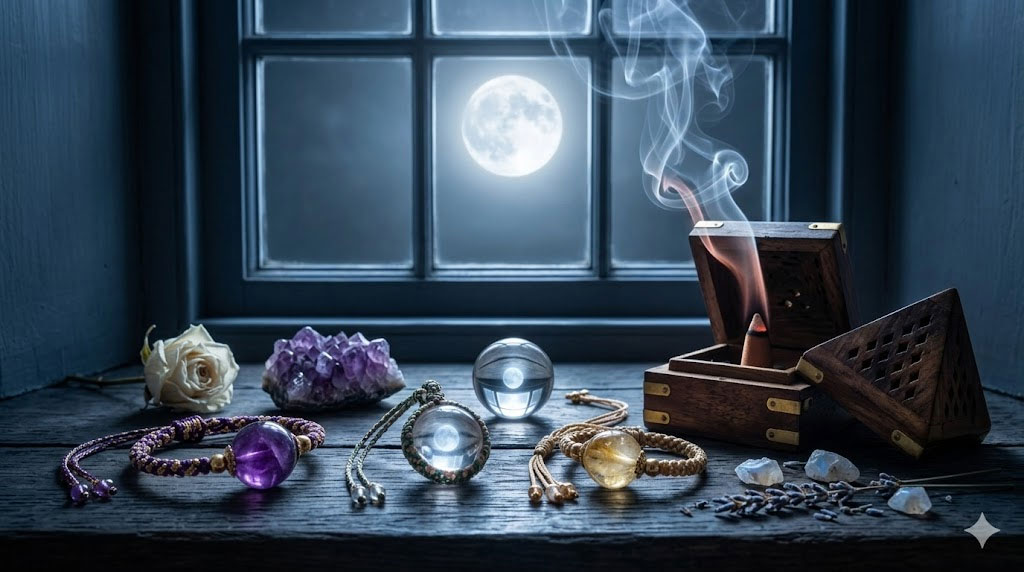
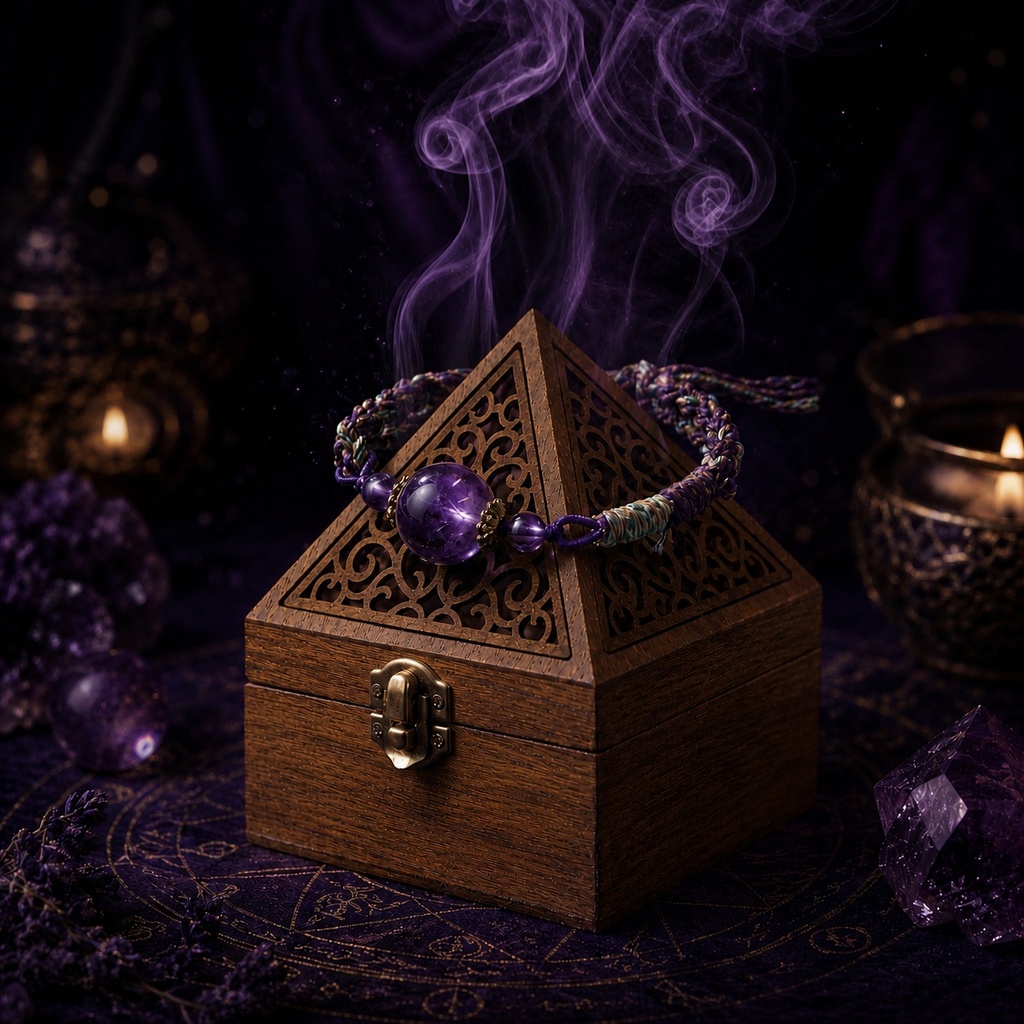
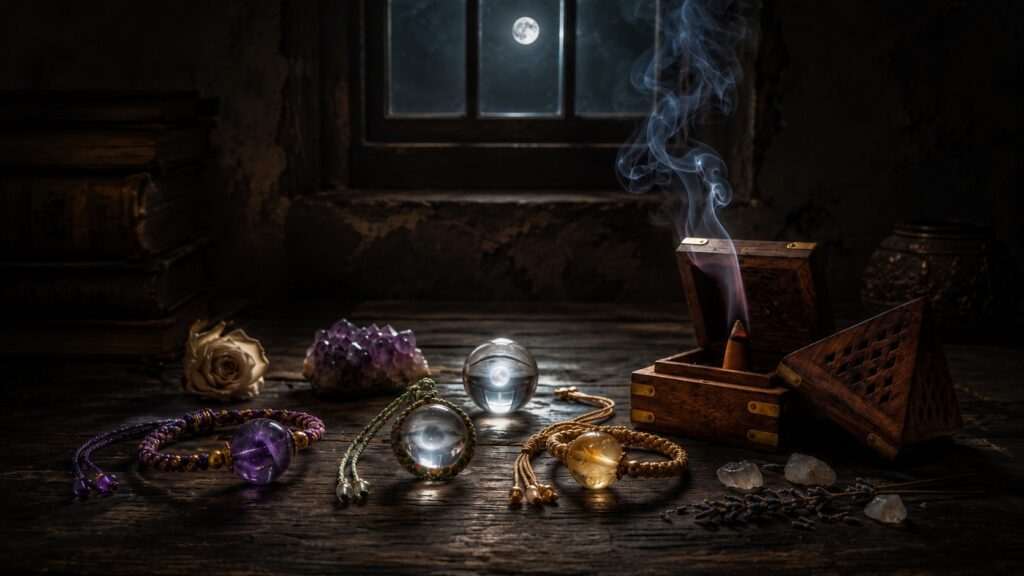
The Sorvara Sacred Pyramid™ box was designed with this in mind. The hand-carved lattice allows smoke to rise through the surface in a pattern that is genuinely worth watching. The form — a pyramid, one of the most consistent sacred forms across human history — carries associations of stability and upward movement. The antique brass closure makes the act of opening it feel like something.
None of this is necessary for incense to work. A simple ceramic holder works perfectly. But beautiful things create beautiful states of mind, and a ritual that you look forward to is a ritual that you maintain.
The Scent You Build Around Yourself
Here is the thing about fragrance that we want to leave you with.
Every scent you choose — for your home, for your rituals, for the crystals you cleanse and the intentions you set — becomes, over time, part of the private architecture of your inner life. A vocabulary that belongs only to you. A set of sensory shortcuts to the states you most want to return to.
Sandalwood means: I am present. I am here. Lavender means: it is safe to let go now. White sage means: something is beginning. Frankincense means: I am going somewhere quiet inside myself.
You build this vocabulary slowly, through repetition and intention. And once you have it, it is yours permanently — encoded in the most durable memory system in the human brain. Long after you’ve forgotten the complicated things, you will remember what something smelled like. You will remember how it made you feel. You will remember what you were becoming, the season you burned that particular incense, in that particular room, beginning something.
Make it something worth remembering.
The Sorvara Ritual Collection includes the Sacred Pyramid™ incense box, the Smoke & Stone™ kit, the Daily Smoke™ incense set, and the Stone Cleanse Kit™ — each designed to make the ritual as beautiful as the intention it holds.