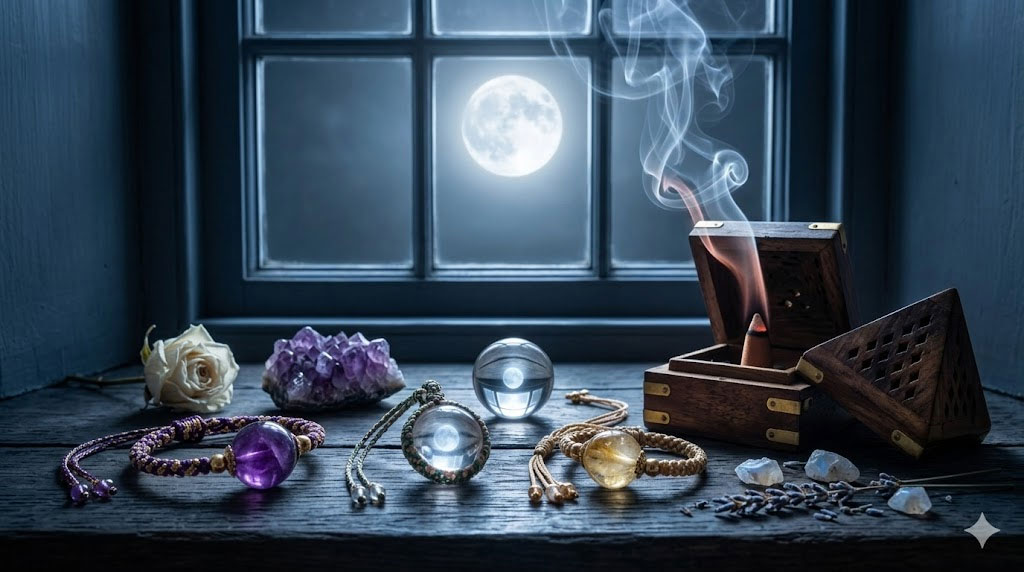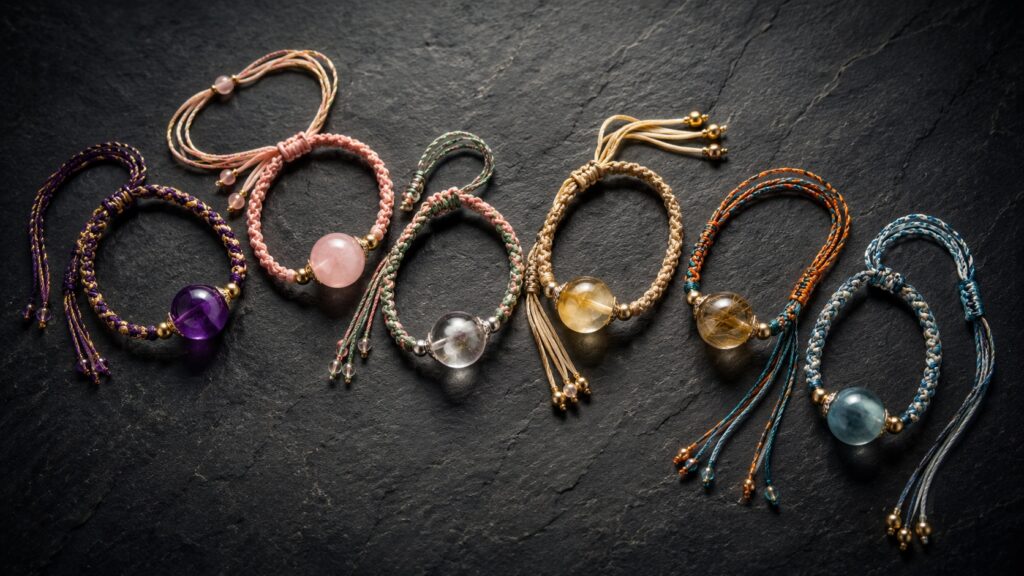
Somewhere right now, someone is lighting a stick of incense.
Maybe it’s in a temple in Kyoto, the smoke rising toward the ceiling in a space that has held that same ritual for eight hundred years. Maybe it’s in a suburban bedroom, a woman on her lunch break who just needed five minutes that belonged to her. Maybe it’s in a small apartment, someone who doesn’t entirely know why they do this — they just know it helps.
All three of those people are participating in something very old. One of the oldest human rituals we know of. And the fact that all three of them arrived at the same practice, across different centuries and cultures and belief systems, is worth sitting with for a moment before we get to the science.
A Brief, Honest History of Incense
The word incense comes from the Latin incendere — to set on fire. Humans have been burning aromatic materials since before recorded history: resins, wood, bark, dried flowers, spices. The smoke rose, the smell spread, and something shifted.
In ancient Egypt, kyphi — a blend of sixteen ingredients including cassia, juniper, and myrrh — was burned in temples at sunset to mark the day’s end and invoke protection through the night. In ancient China, incense was integral to Taoist and Buddhist practice, a physical bridge between the material world and something less tangible. In ancient India, the Vedic tradition of havan — fire ritual with aromatic offerings — underpins practices still performed today.
In Medieval Europe, frankincense was burned in churches not just for its sacred associations but because priests had noticed, empirically, that it calmed crowds. In Indigenous American traditions, white sage and sweetgrass were burned to clear spaces of negative energy before significant gatherings or decisions.
Every one of these traditions arrived at burning something fragrant as a way of marking a transition, clearing a space, or shifting a state of mind — independently, without reference to each other.
That pattern is data. That consistency is telling us something.
What the Research Actually Says
Let’s be honest about what we know and don’t know.
What we know:
The olfactory system — your sense of smell — is the only sense that connects directly to the limbic system, the brain’s emotional processing center, without passing through a relay station first. Every other sense has to make a stop before it gets to the part of your brain that processes emotion and memory. Smell goes straight there.
This is why a particular scent can trigger a memory so vivid it feels physical. This is why certain smells create an almost instantaneous emotional response — calm, comfort, alertness, nostalgia — before you’ve had time to think about it. Your nose is the fastest route to your emotional brain, and fragrant smoke is one of the most efficient ways to use it.
Specific research findings:
Frankincense (Boswellia) — A 2008 study published in the FASEB Journal found that a compound in frankincense resin called incensole acetate activated ion channels in the brain that affect anxiety and depression. The researchers described it as “a new class of antidepressant.” Frankincense has been burned in sacred spaces for thousands of years. It turns out there was a reason.
Lavender — One of the most extensively studied aromatic compounds in neuroscience. Multiple peer-reviewed studies have found that lavender scent reduces cortisol levels, slows heart rate, and decreases self-reported anxiety. A 2019 review in Frontiers in Behavioral Neuroscience found lavender aromatherapy comparable in effect to low-dose anxiolytic medication for generalized anxiety.
Sandalwood — Research suggests sandalwood contains compounds that activate receptors in the skin and nervous system associated with cell regeneration and calm. It has also been shown to slow respiration rate and heart rate, creating a physical state that the body associates with safety and rest.
White Sage — A 2007 study published in the Journal of Ethnopharmacology found that burning medicinal white sage reduced airborne bacteria by 94% in a contained space — a finding that lends some credence to the ancient intuition that smoke “clears” a room. There is also ongoing research into the psychoactive properties of sage compounds, though this is less conclusive.
What we don’t know:
Whether the benefits come from the chemistry of the smoke, from the ritual itself, from the pause it creates, or from some combination of all three. The honest answer is probably: all three, in proportions that are different for every person. Which is fine. You don’t have to understand the mechanism for something to work.
The Five Things Incense Actually Does
Here’s what we’ve observed, what the research supports, and what thousands of years of human practice confirms.
1. It Changes the Chemistry of Your Space
Beyond the bacteria study cited above, fragrant smoke is a genuinely effective way to alter the olfactory character of an environment — to make a space smell different, feel different, and therefore be different in the way you experience it.
Smell is the most powerful environmental cue we have. We know this from retail research (scented stores create stronger memories and longer visits), from hospitality design (hotels use signature scents deliberately), from neuroscience (smell is processed by the same brain regions that process memory and emotion). When you change the smell of your space intentionally, you change the psychological character of that space.
This is what ancient priests and practitioners understood empirically: a room that has been smoked with sacred fragrance is a different room. Not metaphorically. Neurologically.
2. It Marks a Transition
The ritual function of incense — across all the cultures that use it — is to mark a threshold. Something is ending. Something is beginning. We are in a different kind of time now.
This is psychologically powerful because human minds respond to markers. The simple act of doing something consistent and deliberate before a meditation, before sleep, before a difficult conversation, before creative work — tells the nervous system: we are shifting modes now. It’s a trigger. It creates a state.
Athletes use this. Musicians use this. Meditators use this. They use it because it works.
3. It Forces a Pause
You cannot rush incense. It burns at its own pace. You lit it, and now you wait, and there is nothing more to optimize here.
In a life organized around speed and output and the permanent to-do list, the act of sitting with burning incense for five minutes is quietly radical. You’re not producing anything. You’re not improving anything. You’re just watching the smoke. And your nervous system, which has been waiting for permission to slow down, takes it.
This is not nothing. This is, for many people, the most important thing incense does.
4. It Gives You Somewhere to Put Your Intentions
There is a practice across many traditions of releasing intentions or prayers through smoke — the idea being that the smoke carries them upward, outward, away. Whether you interpret this literally, metaphorically, or as pure psychological function, it works.
The act of formulating what you want — naming it clearly, even if only in your own mind, holding it while the smoke rises — is an act of clarity. It makes the thing more real. It gives you something to return to.
5. It Creates a Memory
Smell creates the most durable memories we have. When you build a consistent ritual around a particular scent — this incense, this time of day, this intention — you create a neurological anchor. Over time, the smell alone retrieves the state. The calm comes faster. The clarity comes faster.
This is why the same scent can take you back twenty years to a single afternoon. You can build that kind of anchor deliberately. You just have to repeat it.
How to Actually Build a Ritual (Not a Complicated One)
We want to be clear about something: a ritual doesn’t have to be elaborate. It doesn’t require a dedicated space or expensive equipment or a particular belief system. It requires only consistency and intention — the same two things that make any habit work.
Here is the simplest version:
Choose a scent that means something. Not the most impressive one, not the most traditional one — the one that, when you smell it, makes you feel like the version of yourself you want to be more often. Sandalwood for grounding. Lavender for calm. Frankincense for clarity. White sage for release. Cedarwood for courage. Trust your nose. It knows.
Choose a time. Morning, to set the tone for the day. Evening, to mark its end. Before creative work, before meditation, before sleep. Pick one and start there.
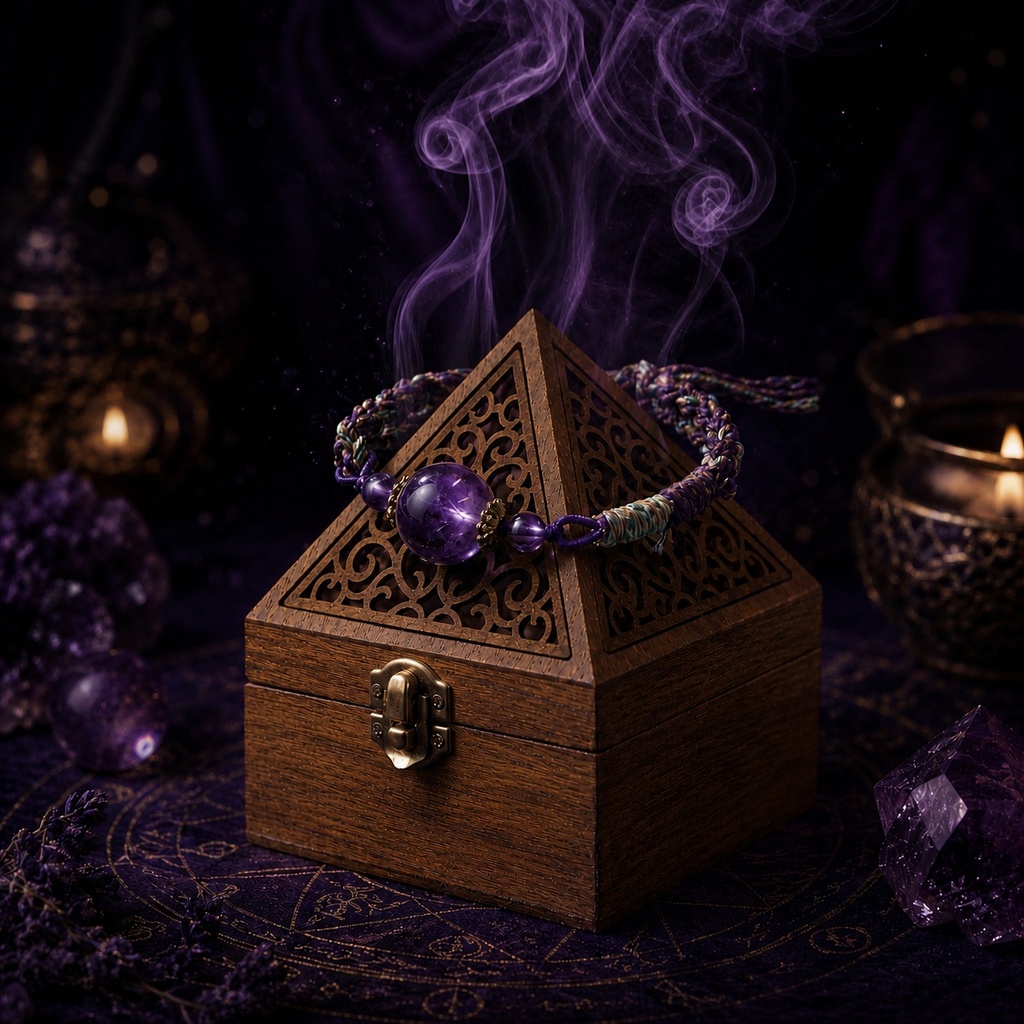
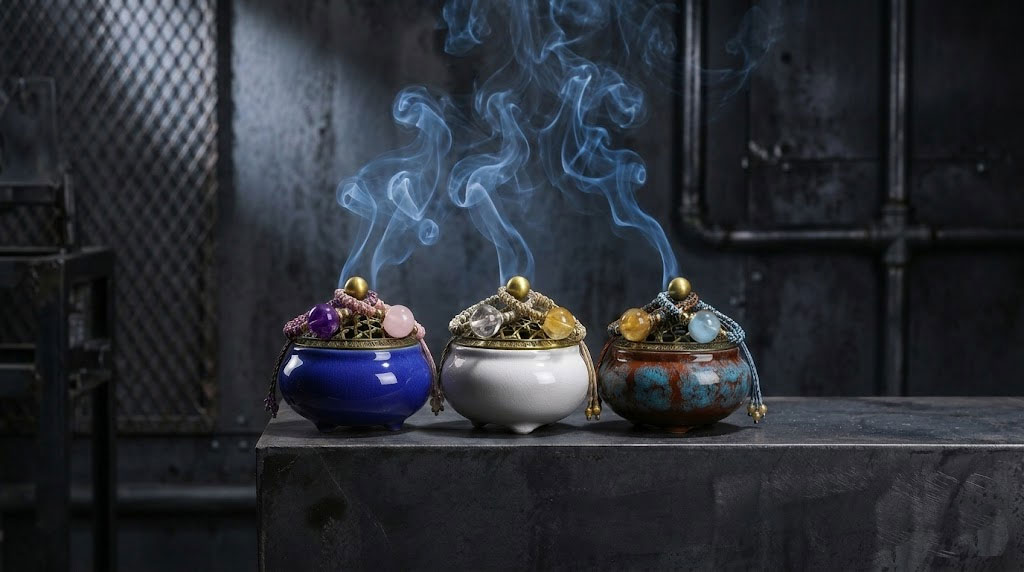
Use a proper vessel. This matters more than it sounds. The quality of the container shapes the quality of the ritual. There’s a reason sacred traditions didn’t burn incense in a coffee mug. The Sorvara Sacred Pyramid™ was designed for exactly this — the smoke rises through the hand-carved lattice, the vessel holds the ash, and the act of using it signals to your brain: this is a different kind of time.
Do nothing else while the incense burns. Just watch. Just breathe. Let it be the only thing happening for three to five minutes.
That’s the entire ritual. It doesn’t need to be more than this. It just needs to happen, on the days when you do it.
A Note on Our Incense
The Sorvara ritual collection uses traditional cone incense formulations — sandalwood, white sage, lavender, and cedarwood — designed for use in the Sacred Pyramid™ box and compatible with any incense holder.
We chose cone incense for a specific reason: it burns evenly, fully, and cleanly — producing a consistent smoke and a cleaner burn than many stick incenses. It also fits naturally into the pyramid box design, allowing the smoke to rise through the carved openings in a way that is genuinely beautiful to watch and practically effective for crystal cleansing.
The scents were selected not for novelty but for function: every formula in the Sorvara collection has a documented history of use in ritual practice across at least two major traditions. We didn’t invent the ritual. We just made it easier to come back to.
The Sacred Pyramid™ incense box and the Stone Cleanse Kit™ are available now. The ritual is yours to build.